
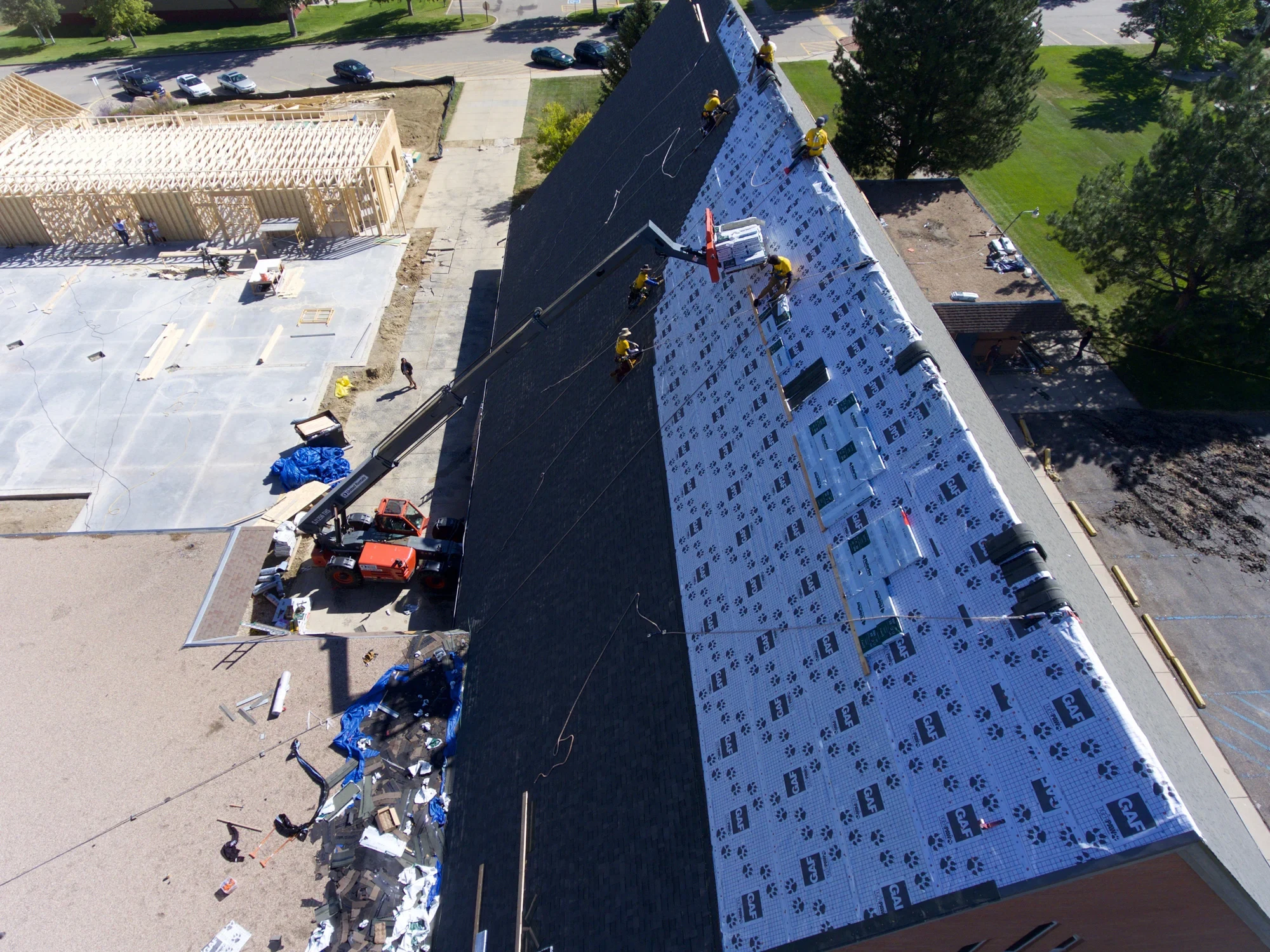
GAF Commercial Roofing Systems in Fayetteville, NC
GAF's TPO, PVC, and modified bitumen commercial roofing lines for Fayetteville buildings. Product range, material availability, and where each system fits.
GAF Commercial Roofing Systems in Fayetteville, NC
GAF's TPO, PVC, and modified bitumen commercial roofing lines for Fayetteville buildings. Product range, material availability, and where each system fits.
GAF's Commercial Line, From Single-Ply to Modified Bitumen
GAF's commercial division covers more roofing system types under one manufacturer than most competitors - single-ply membrane, modified bitumen, built-up roofing, and coatings. That range gives us flexibility when a Fayetteville building's roof mixes old and new sections, or when an owner wants consistent material sourcing across a multi-phase reroof.
A Manufacturer With Roots Across Every System Type
GAF has been in the roofing materials business for well over a century, with a legacy in asphalt-based products that predates single-ply membrane entirely. That heritage still shows up in their modified bitumen and built-up roofing lines, which sit alongside a newer TPO and PVC single-ply lineup developed as the commercial market shifted toward those systems over the past few decades. Few manufacturers can offer a facilities manager both a modern single-ply option and a modified bitumen system with that kind of institutional depth behind it.
For a building owner comparing bids, that breadth mostly matters when a roof isn't a single clean system top to bottom - an addition tied into an original structure, a penthouse mechanical deck added decades after the main roof, or a building that's had at least one prior recover already layered on top of the original assembly. Having one manufacturer that documents compatibility across those older and newer system types simplifies the engineering behind a tie-in detail considerably.
TPO and PVC Lines for Different Building Needs
GAF's TPO products cover a similar thickness range to other major manufacturers, giving us options for both standard retail and hospitality reroofs and the heavier-duty applications where 80-mil membrane makes more sense. Their PVC line brings the same chemical-resistance advantages that make PVC the right call on restaurant and grocery roofs exposed to rooftop kitchen exhaust and grease.
Modified Bitumen and BUR Options for Older Building Stock
A good number of the older commercial buildings around downtown Fayetteville and the surrounding districts were originally roofed in some form of asphalt-based system, and GAF's modified bitumen and built-up roofing products remain relevant when a full switch to single-ply doesn't make sense for the building's structure, tie-in details, or budget. Having a manufacturer that still actively supports and updates these older system categories matters on buildings where a hybrid approach - part single-ply, part modified bitumen at a complex tie-in - is the practical answer.
Self-Adhered Systems and Reduced Hot Work
GAF also produces self-adhered membrane options that install without torches or hot asphalt kettles, which matters on occupied buildings where open flame or asphalt fumes create real disruption - a downtown storefront, a medical office with sensitive air-handling, a hotel with guests in adjacent rooms. Self-adhered systems trade a bit of installation speed for meaningfully less smell, smoke, and fire risk during the work itself.
Material Availability and Project Timelines
GAF runs one of the larger distribution networks in the roofing industry, which in practice means membrane, insulation, and accessory materials for a standard project rarely sit on a long backorder. That matters when weather or a discovered deck issue shifts a project's schedule mid-stream - having material show up on the revised timeline instead of the original one keeps a partially open roof from sitting exposed any longer than it has to.
It also shortens the gap between an emergency tarp-and-dry-in response and the permanent repair that follows it. When a storm damages a section of roof and the building needs a fast interim fix, knowing the permanent replacement materials aren't stuck behind a weeks-long order changes how we sequence the whole recovery timeline for the owner.
- Standard retail and hospitality reroofs specifying TPO in common thickness ranges
- Restaurant and grocery buildings needing PVC's chemical resistance near kitchen exhaust
- Older downtown buildings with existing modified bitumen or built-up roofing
- Occupied buildings where self-adhered installation reduces fire and odor risk
- Multi-phase projects benefiting from consistent, readily available material sourcing
Matching a GAF System to the Building in Front of Us
We treat GAF's product range the same way we treat any manufacturer's lineup - as a set of options to weigh against the specific roof, not a default answer. Their broad coverage across system types means the comparison sometimes comes down to which manufacturer has the strongest specific product for an unusual detail on a given building, rather than a blanket preference for one brand across every job.
Common Questions on GAF Commercial Systems
Does GAF make products for green or reflective roof requirements?
Their commercial line includes reflective membrane options across TPO and PVC, along with coating products, which we'd evaluate against a specific building's energy code target.
Can a GAF modified bitumen roof be recovered with TPO later?
Sometimes, depending on the condition of the existing bitumen system and whether it's dry and structurally sound - we confirm that with core cuts before proposing any recover strategy.
Is self-adhered membrane as durable as torch-applied or fully adhered systems?
Installed correctly, yes. The waterproofing performance comes from the membrane and bond quality rather than the installation method used to achieve it.
How do I know what GAF system is already on my roof?
Membrane markings, seam style, and installation records usually identify the system. If documentation is missing, we can typically narrow it down during a roof inspection.
Does GAF offer warranty coverage comparable to other major manufacturers?
Warranty terms vary by system, thickness, and installation method across every manufacturer we work with. We review the specific options that apply to a given project rather than quoting a general figure.