
Fast-Food & QSR Roofing in Fayetteville, NC
Fast-food and QSR roofing in Fayetteville, NC: drive-thru lane protection, grease exhaust detailing, and fast turnaround for franchise-standard locations.
Fast-Food & QSR Roofing in Fayetteville, NC
Fast-food and QSR roofing in Fayetteville, NC: drive-thru lane protection, grease exhaust detailing, and fast turnaround for franchise-standard locations.
Drive-Thru Roofs That Keep the Line Moving
Quick-service restaurants along Bragg Boulevard, Skibo Road, and Ramsey Street run some of the highest drive-thru volume in the region, driven in large part by shift workers and soldiers grabbing food on tight schedules. A closed drive-thru lane or a dining room shut down for roof work costs these locations real sales fast, so speed and sequencing matter as much as the roof system itself.
Small Footprint, High Equipment Density
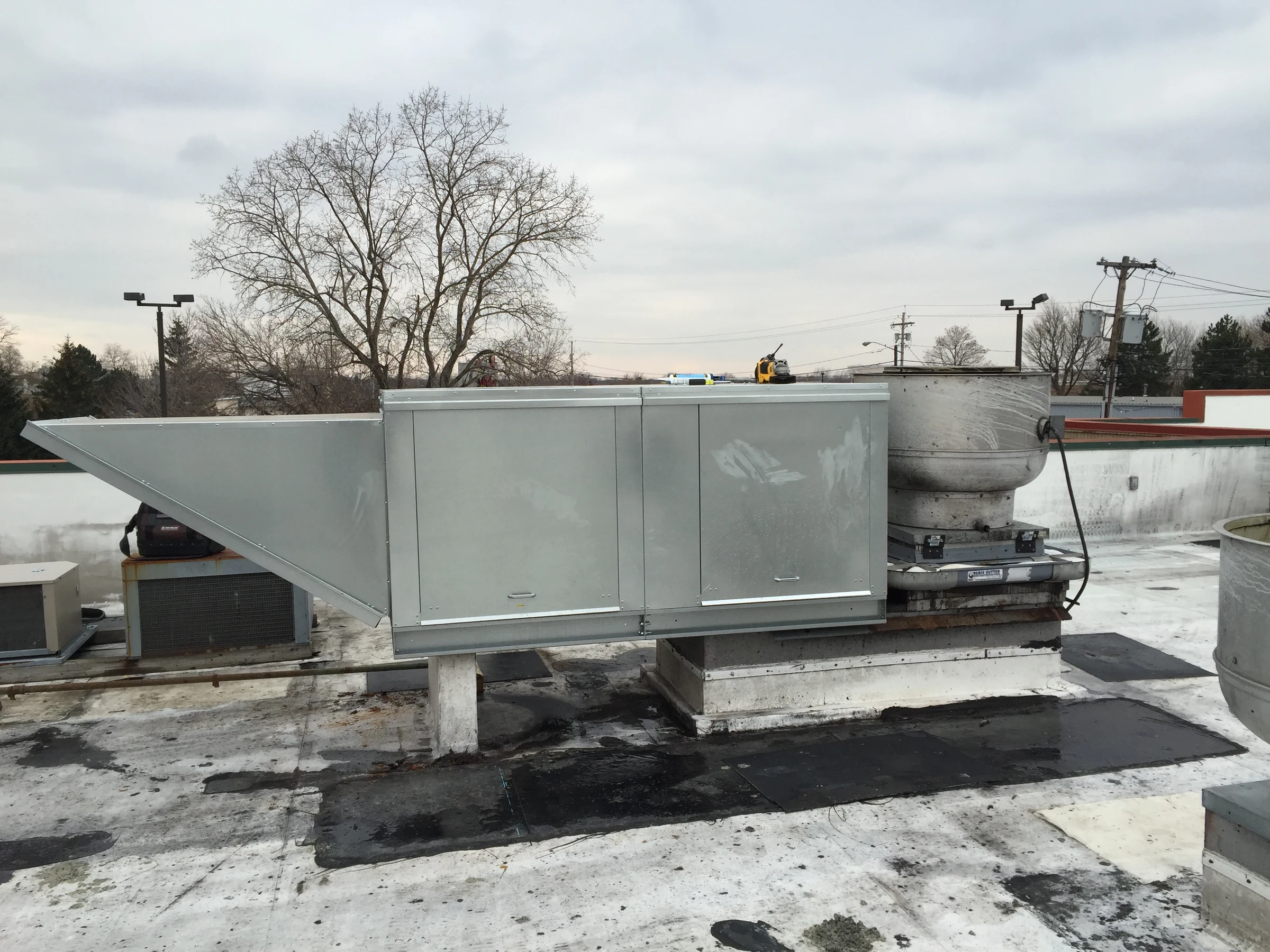
A QSR roof is small compared to a big-box or grocery store, but it's packed with equipment: grease exhaust fans, make-up air units, walk-in cooler condensers, and HVAC serving a dining room that never fully empties out. We map every penetration before starting so flashing details around grease exhaust and condenser curbs get the attention they need, since a small roof with dense equipment has more vulnerable points per square foot than a much larger building.
That density also means less margin for error in sequencing, since a crew can't simply avoid a busy corner of the roof the way they might on a warehouse with acres of open field to work around instead.
Keeping the Drive-Thru Lane Open
Losing dining room seating during roof work is an inconvenience for a QSR location; losing the drive-thru lane is a much bigger hit, since drive-thru often accounts for most of a location's volume in this market. We stage equipment and material drops away from the drive-thru lane and menu board, and we sequence roof sections to avoid ever needing to block that lane for staging or access.
We also time material lifts and noisy equipment placement around the lane's own peak windows, since a QSR's drive-thru volume swings hard around meal periods and a slow midmorning stretch gives us a far easier staging window than the lunch rush.
Grease Exhaust Details That Wear Faster Than Standard Roofing
Grease-laden exhaust air breaks down standard roofing membrane faster than almost any other rooftop condition we deal with, and QSR roofs concentrate that exposure into a small area right around the exhaust fan. We check grease exhaust flashing and surrounding membrane condition closely on every QSR inspection, since that's consistently where these roofs fail first, regardless of the building's age.
A roof that's otherwise years from needing full replacement can still have a failing section right at the exhaust fan curb, and we treat that as its own repair item rather than waiting until it's bad enough to justify a larger project.
- Drive-thru burger and sandwich chains
- Coffee and quick-service beverage locations
- Pizza delivery and carryout locations
- Chicken and fried-food quick-service chains
- Convenience-store attached quick-service counters
- Independent fast-casual storefronts
Fast Turnaround Matching Franchise Operating Standards
Most QSR locations here operate under a franchise agreement with strict standards for how long a location can run with visible construction, patch materials, or partial equipment downtime. We plan projects to move quickly through each phase and keep the site looking presentable to customers throughout, since franchise brand compliance is often as much a concern for the owner as the roof itself.
We also keep temporary signage and barricades to the minimum footprint needed, since a franchise location's curb appeal drives walk-in traffic just as much as its drive-thru volume, and an overly cluttered lot during construction can quietly cost a location business it never gets a clear reason for.
Weather Timing Around a Building With No Slow Season
Unlike some retail formats, QSR locations near a military installation don't really have an off-season, with volume staying steady across shift changes around the clock. We schedule tear-off with tight weather windows and keep the building fully protected overnight, since there's rarely a stretch where the parking lot and drive-thru go quiet enough to leave a section exposed longer than planned.
That means we plan conservatively around the forecast, opening less roof at a time than we might on a building with a genuine slow season, so a sudden afternoon thunderstorm common to this region in summer never catches an exposed section unprotected.
Multi-Unit Franchisees Managing Several Service Areas at Once
Many QSR locations along this corridor belong to a franchisee who operates several restaurants across the market rather than a single independent owner, and that changes how we approach scheduling and proposals. We can plan roof inspections and repair timing across a franchisee's whole portfolio at once, flagging which locations need attention soonest instead of treating each restaurant as a separate cold call.
That portfolio view also helps with budgeting, since a franchisee managing capital expenses across five or six stores benefits from knowing roughly when each roof will need major work rather than being surprised store by store.
Beyond the main building roof, many QSR locations have a separate canopy structure over the drive-thru lane or order point, and that smaller roof takes constant exposure to vehicle exhaust and weather with almost no break in traffic underneath. We inspect canopy roofing on its own during any QSR assessment rather than folding it into the main building's condition, since these smaller structures often show wear well before the primary roof does, simply from the volume of vehicles passing beneath them all day.
Menu board and speaker post foundations sometimes tie into that same canopy structure, and we check those connection points during any canopy inspection, since a loose foundation there can transfer movement into the roof edge above it over time.
Common Questions From QSR Owners and Managers
Will the drive-thru have to close during roof work?
We plan staging and sequencing specifically to avoid blocking the drive-thru lane, since we know it's often the primary source of volume.
How do you handle grease exhaust penetrations?
We inspect and detail those closely, since grease exposure breaks down membrane faster there than anywhere else on a QSR roof.
Can work be done fast enough to meet franchise appearance standards?
Yes, we plan the project to move efficiently through each phase and keep the site presentable to customers throughout.
Do you work around 24-hour or extended operating hours?
We do, scheduling the loudest phases around whatever slower windows your specific location actually sees.
What roof systems hold up best on small QSR footprints?
Durable single-ply systems like PVC or TPO membranes are common choices, detailed carefully around the dense equipment layout typical of these buildings.