
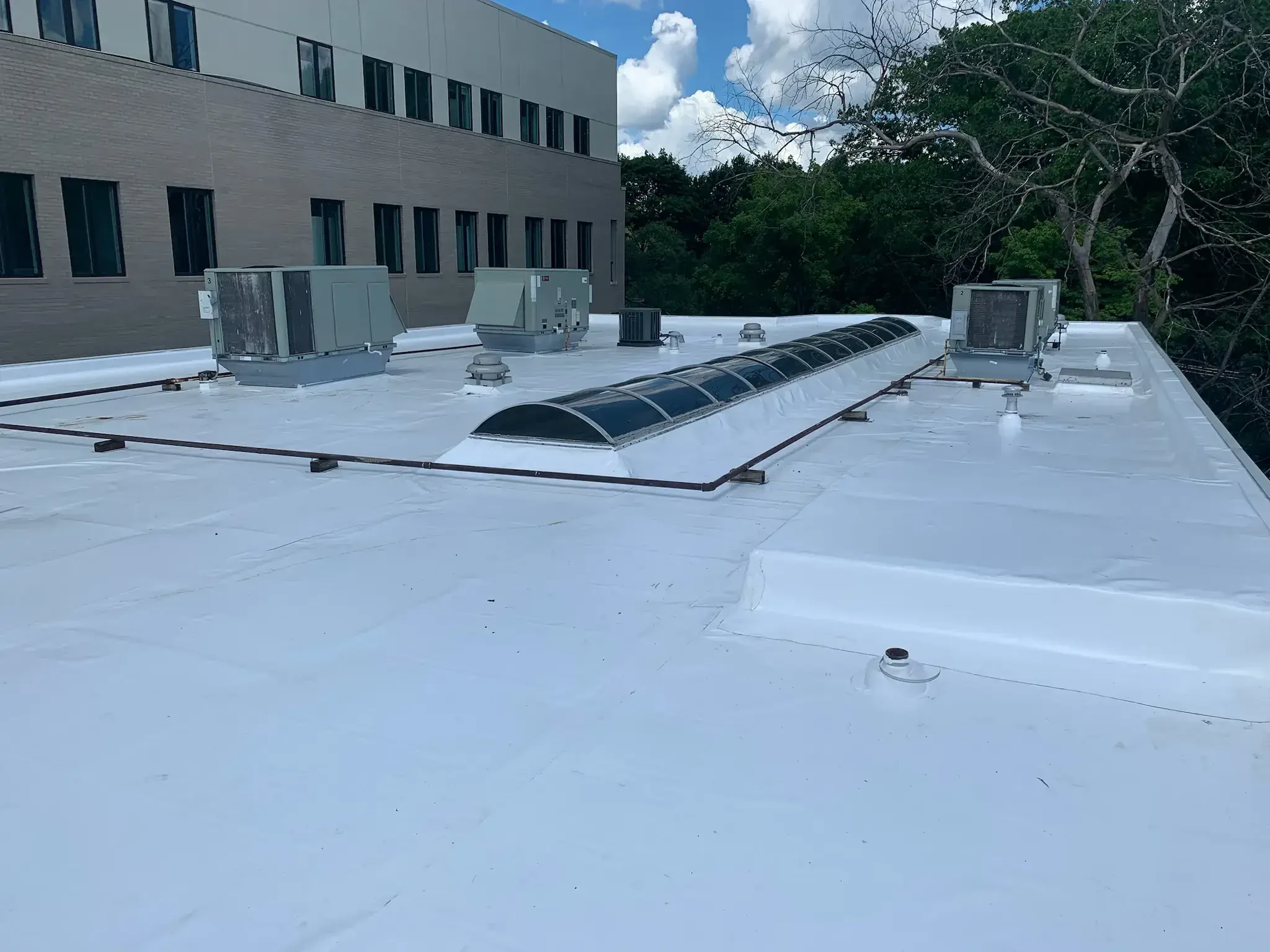
PVC Roofing in Fayetteville, NC
PVC roof systems for Fayetteville-area poultry and pork processing plants, resisting grease and chemical exposure while roofing zones stay production-ready.
PVC Roofing in Fayetteville, NC
PVC roof systems for Fayetteville-area poultry and pork processing plants, resisting grease and chemical exposure while roofing zones stay production-ready.
PVC Where Grease, Steam, and Chemical Exposure Rule Out Other Membranes
PVC is the membrane we reach for on food and poultry processing buildings across this market, where grease-laden exhaust and cleaning chemicals break down other roof systems faster than the manufacturer's chart admits. Clinton, Raeford, and Tar Heel all run processing plants where the roof takes as much punishment from the operation underneath it as from the weather above.
Why PVC Handles Processing Plant Exposure Better
Grease vapor from cooking, rendering, or processing exhaust settles on a roof membrane over time, and asphalt-based systems and standard rubber can soften or degrade under sustained grease and chemical contact. PVC resists that kind of exposure significantly better, which is why it's the standard specification on plants like the poultry operations in Clinton and Raeford and the pork processing plant in Tar Heel that runs under one of the largest single roofs of its kind anywhere.
The same resistance that handles grease also handles cleaning chemicals used to sanitize processing areas, some of which get exhausted onto the roof deck through rooftop vents and can eat into a membrane that isn't rated for it.
Sanford's manufacturing base, including pharmaceutical and heavy equipment operations, brings a similar chemical-exposure calculation into play even outside food processing, and we run the same PVC-versus-other-membrane comparison for those buildings before recommending a spec.
Hot-Air Welded Seams and Why That Matters Here
PVC seams weld with hot air into a homogeneous bond rather than an adhesive lap, which holds up better under the grease exposure these roofs see. We test-weld every morning before running full seams, because ambient humidity and surface film from processing exhaust both affect weld quality, and a plant that runs continuous exhaust needs that checked more carefully than a typical retail roof.
Scheduling Around a Plant That Doesn't Stop
Processing plants in this market run multiple shifts and can't take a section of roof out of service over active production equipment. We break these roofs into zones tied to what's running underneath, seal each zone before moving on, and schedule anything that requires cutting power or shutting down rooftop exhaust fans for planned maintenance windows the plant already has on its calendar rather than asking them to create one for us.
We also coordinate material staging so delivery trucks aren't competing with the plant's own incoming and outgoing freight trucks at the same dock doors during peak shift changes.
Live animal receiving areas at poultry and pork plants add another layer to that coordination, since roof access routes and material staging need to stay clear of areas with their own biosecurity rules, beyond the general safety fencing on the rest of the site.
What We Verify Before Speccing PVC
- Type and volume of exhaust venting onto the roof deck
- Existing membrane condition and where grease damage is concentrated
- Deck moisture under current roofing
- Rooftop equipment loads specific to processing operations
- Drainage capacity given wash-down water that can reach the roof
- Access restrictions tied to food-safety protocols on site
Food-safety protocols on a processing site often restrict where crews can walk, stage materials, or access the roof, and we build our access plan around those rules before scheduling anything.
Storm Exposure on Processing Buildings
The remnant systems that follow hurricanes further south still bring heavy rain and sustained wind into the Sandhills, and a processing building can't afford water intrusion over product or equipment. We prioritize emergency response calls at active plants during storm season because downtime there has a direct production cost that a typical retail building doesn't carry the same way.
Emergency tarp and dry-in work at a processing plant also has to account for food-safety exclusion zones, so even a temporary patch has to go on in a way inspectors will sign off on rather than a generic tarp job that might trigger a compliance issue on its own.
Pine Debris on Processing Plant Roofs
Even industrial sites out here sit close enough to longleaf pine cover that pollen and needle drop reach the roof every spring. On a processing plant, that debris mixes with grease residue in low spots and drains, which accelerates buildup compared to a cleaner commercial roof. We factor that into maintenance schedules for these specific sites rather than using a generic interval.
Drain backups on a processing roof carry a different consequence than on a typical warehouse, since standing water combined with grease residue can accelerate membrane degradation right at the point where a leak would land over active equipment or a product line below.
We schedule drain-clearing visits around a plant's own sanitation calendar where possible, since crews are already moving through the facility on those days and a coordinated visit means less total disruption than a separate roof-only appointment.
Questions From Plant Facilities Managers
Can PVC handle grease exhaust from our processing lines?
Yes, that's the primary reason we specify it on processing buildings in this market over other membrane types.
How do you install roofing without shutting down our production line?
We zone the roof to match what's running below and schedule cutovers around your existing maintenance windows.
Do you follow our food-safety access protocols?
Yes. We build our staging and access plan around whatever restrictions your site requires before scheduling the work.
How often should a processing plant roof be inspected?
We recommend quarterly given the combination of grease exposure, drainage demands, and this region's pine debris.
Will PVC outlast EPDM on a plant like ours?
Under grease and chemical exposure specifically, yes, PVC typically holds up longer than EPDM. On a building without that exposure, the calculation changes.