
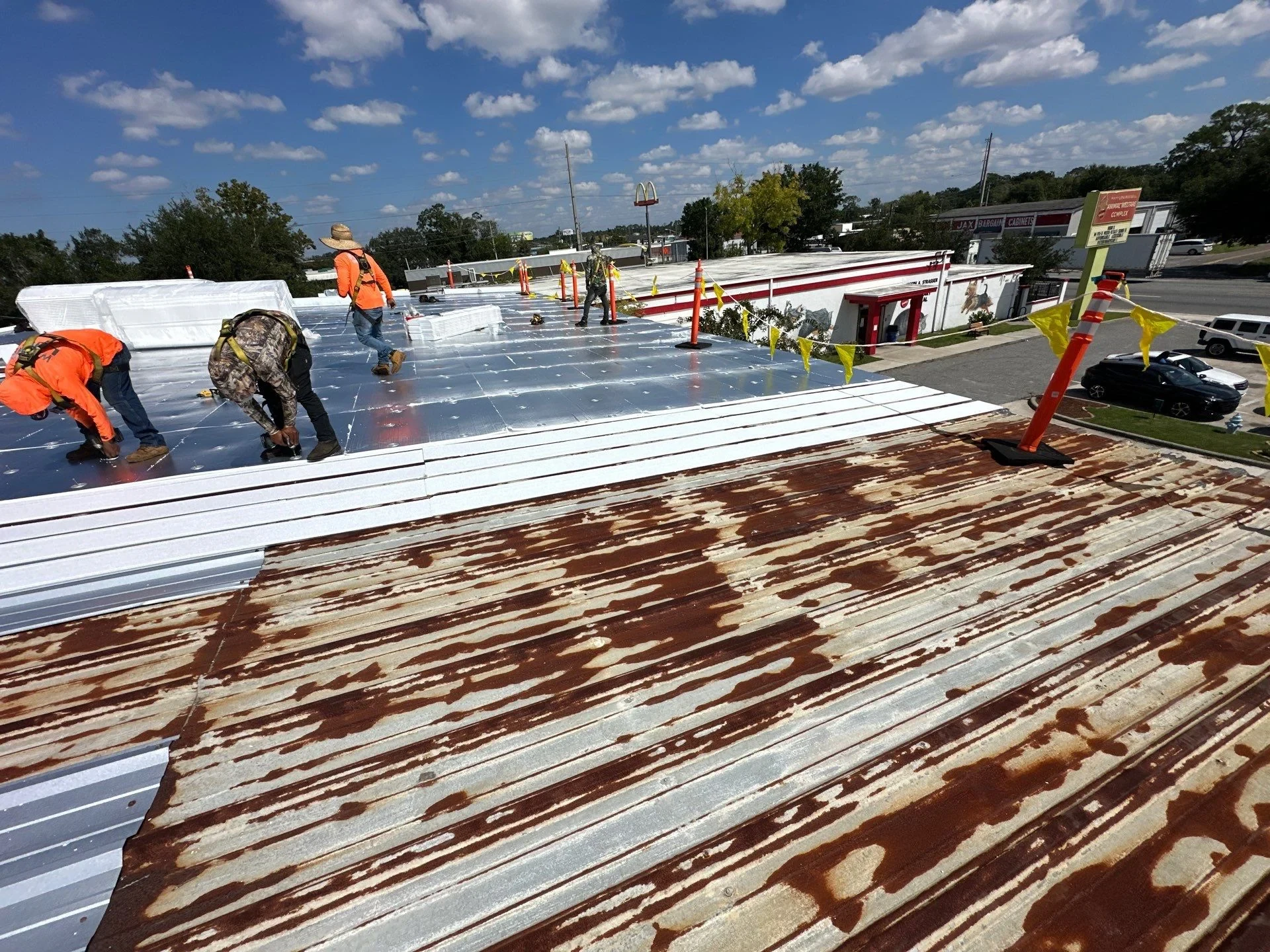
Roof Recover Overlay in Fayetteville, NC
Recover overlay roofing for Fayetteville-area warehouses and distribution buildings, phased bay by bay so dock doors keep shipping through the project.
Roof Recover Overlay in Fayetteville, NC
Recover overlay roofing for Fayetteville-area warehouses and distribution buildings, phased bay by bay so dock doors keep shipping through the project.
Recover Overlays That Keep Warehouse Bays Shipping While the Roof Gets Rebuilt
A recover overlay lets us rebuild an aging roof system over sound existing insulation and deck without opening the building to weather the way a full tear-off does. For distribution and warehouse buildings along I-95 that can't take a facility-wide shutdown, that difference is the whole decision.
Why Recover Is the Right Call on So Much of This Corridor's Building Stock
Warehouses and trucking terminals in Dunn, Benson, and Lumberton were mostly built for function, not architectural longevity, and a lot of them are reaching the point where the original roof system needs more than a patch but doesn't necessarily need to come off down to bare deck. If a moisture survey confirms the insulation and deck are still dry, a recover system installed on top gives the building another fifteen to twenty years of service without ever exposing the interior to open sky.
That matters most on facilities running continuous receiving and shipping, where an open roof over product inventory is a real liability rather than a minor inconvenience.
Facilities tied to seasonal freight cycles, food distribution ahead of holiday demand or agricultural product moving through Sampson and Harnett county processing plants, have even less tolerance for downtime during their peak months, and recover overlay work timed around those cycles is often the only realistic path to getting the roof addressed at all.
The Moisture Survey That Decides Recover Versus Tear-Off
We don't quote a recover job without confirming what's under the existing roof first. Infrared or core-cut moisture surveys tell us whether the insulation is still dry and whether the deck has any structural compromise. If it's dry, recover is on the table. If it's wet, recovering over it just traps the problem under a new roof and guarantees a callback in a few years. We show customers both numbers, recover now versus tear-off now, so the decision is based on what's actually happening under the surface rather than which option costs less upfront.
Phasing an Overlay Bay by Bay on an Active Distribution Facility
The entire value of a recover overlay on a working warehouse comes from doing it in sections small enough that the rest of the building keeps operating normally. We map the overlay to the facility's bay structure, sequence the work around which dock doors are scheduled for freight that week, and keep every completed section fully weathertight before moving to the next rather than leaving multiple bays partially open at once.
For facilities running receiving on a set schedule, like plants tied to seasonal freight surges, we coordinate the overlay timeline around slower shipping windows where the facility has more flexibility to shift dock assignments during the work.
What We Verify Before Recommending an Overlay
- Insulation and deck moisture content across representative test cuts
- Structural capacity for the added weight of a new system over the old
- Existing drainage performance and whether it needs correction before overlay
- Rooftop equipment and how it will tie into the new roof height
- Code requirements for recover versus new construction in this jurisdiction
- How many recover layers already exist, since some codes limit how many overlays a roof can carry
That last point catches people off guard more than any other. A roof that's already been recovered once may need tear-off this time around regardless of moisture condition, simply because of layer limits.
Hurricane-Remnant Wind Load on Recover Systems
An overlay adds weight and changes the wind uplift profile of a roof, and we recalculate fastening and attachment for the new assembly rather than assuming the original roof's fastening pattern still applies. That recalculation matters more here than in a low-wind region, since remnant systems from storms like Matthew and Florence still bring sustained wind loads into the Sandhills well after landfall further south or east.
Drainage and Sandy Soil Discharge on Recovered Roofs
An overlay is also the point where we correct any drainage shortfalls in the original design, adding tapered insulation at chronic low spots or upsizing drains where the original system was undersized. The Sandhills' sandy soil drains fast once water reaches grade, which gives discharge points here more forgiveness than a clay-soil region would have, but that's no substitute for fixing slope and drainage capacity on the roof itself during the overlay.
We check downspout and scupper discharge points against the ground-level drainage plan before finishing an overlay, since even fast-draining sandy soil can erode or wash out a discharge area if the roof-side flow is concentrated onto one small footprint instead of spread across several points.
Questions About Recover Overlays
How do we know if our roof qualifies for recover instead of tear-off?
A moisture survey tells us. If the insulation and deck are dry, recover is usually on the table. If not, tear-off is the honest recommendation.
Can you do this without shutting down our warehouse?
Yes. We phase the overlay by bay and tie the schedule to your dock door and freight schedule so the facility keeps operating.
Has our roof already reached its recover limit?
Some codes limit how many layers a roof can carry. We check that before quoting an overlay, since it can force a tear-off decision regardless of moisture condition.
Will an overlay fix our drainage problems?
It's the right time to. We can add tapered insulation or upsize drains during the overlay rather than covering the same low spots again.
Does an overlay hold up to hurricane-remnant wind the same as our original roof?
We recalculate fastening for the new assembly's weight and profile rather than assuming the original attachment pattern still applies.