
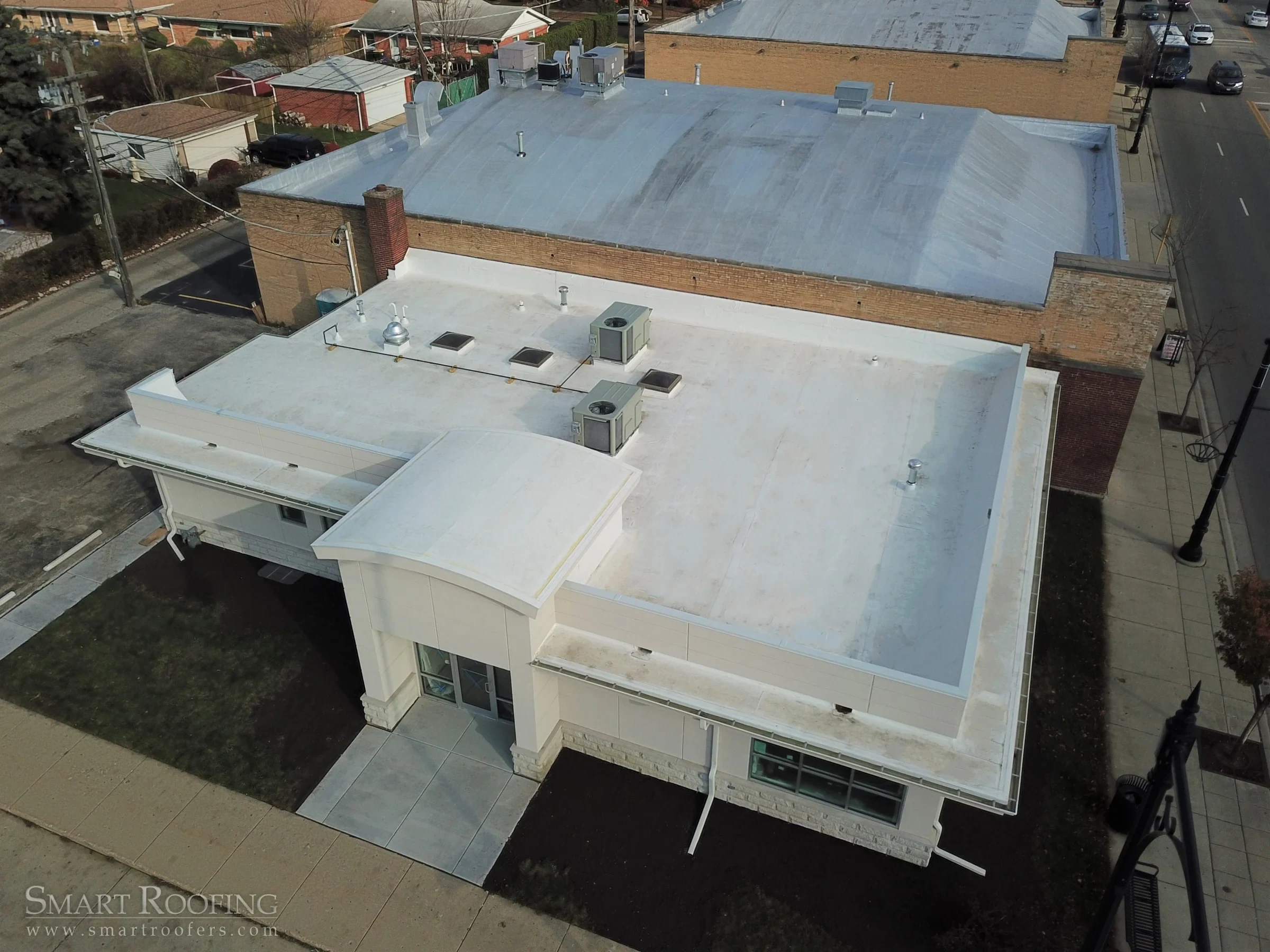
Storm Damage Roof Repair in Fayetteville, NC
Storm damage roof repair in Fayetteville, NC — wind uplift, membrane tears, and rain intrusion from hurricane remnants, assessed and repaired without guessing at what a storm did.
Storm Damage Roof Repair in Fayetteville, NC
Storm damage roof repair in Fayetteville, NC — wind uplift, membrane tears, and rain intrusion from hurricane remnants, assessed and repaired without guessing at what a storm did.
What Wind and Rain Actually Do to a Roof Here, Not What They're Supposed To
Fayetteville does not take a direct hurricane landfall, but it does not need one. Matthew in 2016 and Florence in 2018 both arrived well inland as slow-moving rain engines that put more water on this region in 48 hours than most roofs see in a normal month, and the wind that came with them found every weak edge detail on the way through.
Why Inland Does Not Mean Safe
Both storms are still part of how building owners here think about roof condition, because both proved that distance from the coast does not buy immunity from real damage. Matthew's rainfall pushed the Cape Fear River to record levels and left standing water on plenty of low-slope commercial roofs for days rather than hours. Florence stalled over the region long enough that total rainfall mattered as much as peak wind speed — a roof that could shed a fast-moving storm's rain had a much harder time with days of steady saturation.
The wind from a downgraded tropical system still runs strong enough, in sustained gusts, to lift a membrane edge that has been marginal for a while. We see it most at parapet caps, loose coping, and older edge metal that was already due for attention before the storm gave it a reason to fail outright.
What Wind Damage Actually Looks Like on a Low-Slope Roof
Uplift starts at the perimeter almost every time — a section of coping that has come loose, edge metal that has pulled away from its fastening, a membrane edge that has peeled back a few feet and let wind get underneath the field. From there it can propagate inward if nobody catches it early, turning a repairable edge failure into a much larger section of lost membrane.
We also see fastener backout on mechanically attached systems after sustained gusting, and seam separation on older single-ply roofs where the adhesive or weld had already started to weaken before the storm arrived.
What Rain Damage Looks Like When It Is the Volume, Not the Wind
Roofs with any drainage or ponding issue going into a Florence-type event take on saturated insulation even without a single membrane failure, because water sitting for days finds its way through pinhole-sized gaps that a normal rain event would never test. That is often not visible until weeks later, when a soft spot shows up underfoot or a utility bill creeps up from lost insulation value.
We check for this specifically after any multi-day rain event, separate from any wind damage inspection, because saturated insulation under an intact-looking membrane is one of the more expensive things to leave undiagnosed.
How We Assess and Repair After a Storm
The process starts with a full roof walk documenting every finding with photos, dated to the specific storm event. We separate pre-existing wear from storm-caused damage as clearly as the roof allows, because that distinction matters for whatever the owner does next with an insurer.
Repairs get prioritized by what is actively letting water in versus what is compromised but currently holding. We are not in a position to tell an owner what an insurance claim will or will not cover — that is between the owner and their carrier — but we document condition specifically enough that whoever reviews the claim has real information to work from.
We also keep our own dated records of every storm assessment we perform, which has turned out to be useful more than once when a building changes ownership or management and the new team needs a documented history of what happened to the roof during a specific event years earlier.
What a Storm Damage Assessment Covers
A post-storm roof assessment typically includes:
- Photo-documented perimeter check — coping, edge metal, parapet flashing
- Membrane field inspection for wind lift, tears, and fastener backout
- Moisture scan for saturated insulation from prolonged rain exposure
- Drainage check for debris or damage limiting flow after the storm
- Prioritized repair scope, separating active leaks from at-risk areas
Storm Damage Questions We Get After Every Season
How soon after a storm should the roof get looked at?
As soon as it is safe to get a crew up there. Wind and saturated insulation damage can be present without any visible interior sign yet, and the earlier it is documented, the clearer the record of what the storm actually did.
Can you tell what damage came from this storm versus what was already there?
In most cases, yes — fresh membrane tears, recently pulled fasteners, and newly lifted edge metal look different from long-term wear. We document that distinction as clearly as the roof allows.
Will you deal with our insurance company directly?
We provide the documentation and repair scope; how that is handled with the carrier is between the owner and their adjuster. We are glad to walk an adjuster through what we found on the roof if that is useful to the process.
Does standing water after a storm always mean the roof failed?
Not necessarily — some ponding for a day or two after a heavy rain event is normal on plenty of low-slope roofs. It becomes a concern when it sits for multiple days or shows up in a spot that did not pond before the storm.
What if the damage looks minor but we are worried about long-term effects?
That is exactly what a moisture scan is for. Saturated insulation under a membrane that looks fine on the surface does not announce itself right away, and it is worth checking after any storm that dropped significant rain over more than a day.