
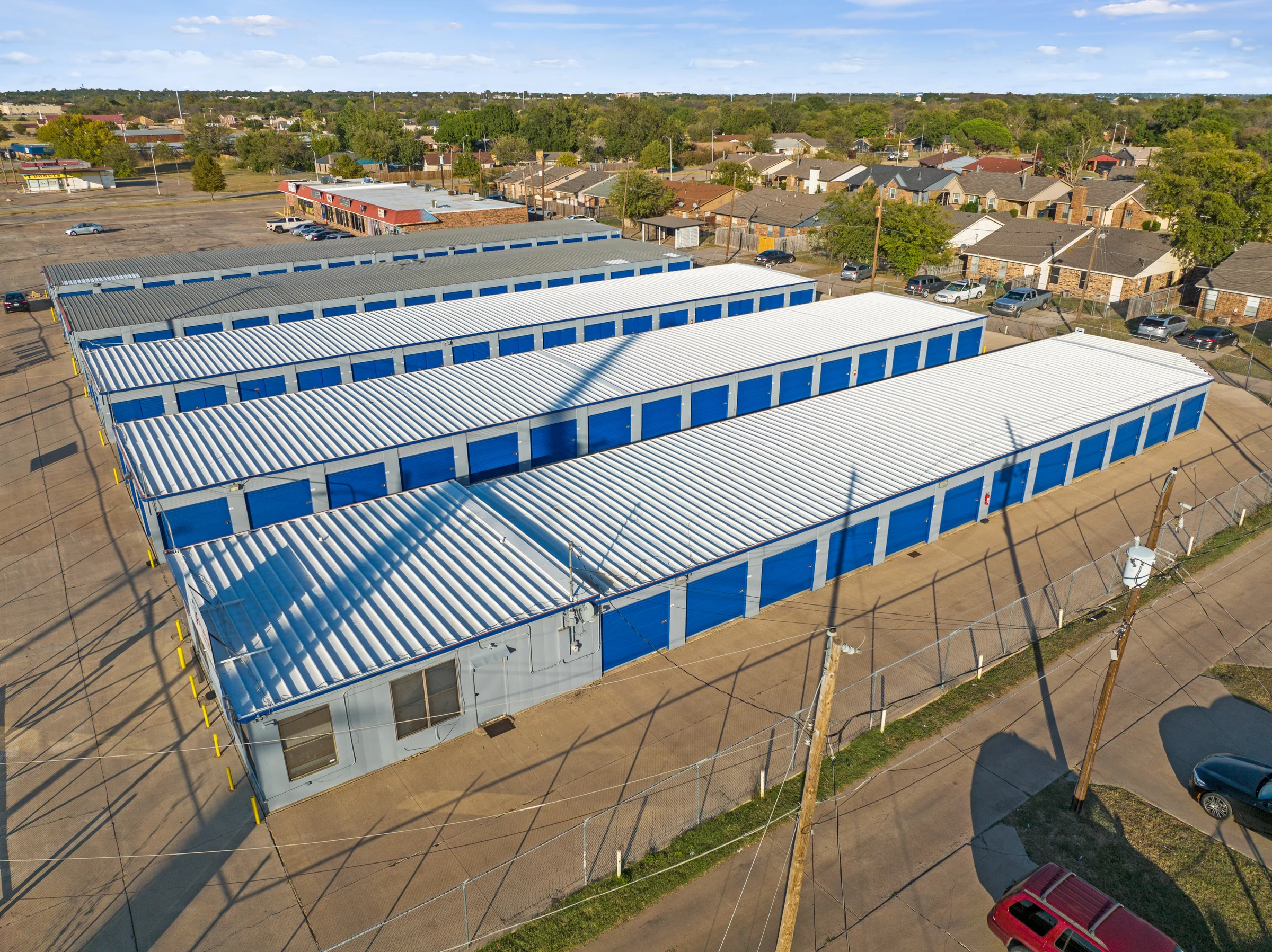
Self-Storage Facility Roofing in Fayetteville, NC
Self-storage facility roofing in Fayetteville, NC: metal panel seam inspection, unit-level leak tracing, and fastener corrosion checks for storage properties.
Self-Storage Facility Roofing in Fayetteville, NC
Self-storage facility roofing in Fayetteville, NC: metal panel seam inspection, unit-level leak tracing, and fastener corrosion checks for storage properties.
Storage Facility Roofs Protecting Household Goods, Not Simply Building Contents
Self-storage demand in this market tracks closely with military move season, since outgoing families need somewhere to put a household's worth of belongings during a move, and incoming families often need the same thing while they wait on base housing or a lease to start. A roof leak at a storage facility doesn't damage empty warehouse space, it damages someone's furniture, uniforms, or family photos sitting in a climate that isn't controlled the way a house is.
Metal Panel Roofs Over Long Single-Story Rows
Most self-storage facilities in this market are built as long rows of single-story units under metal panel roofing, a different structural profile than the flat membrane roofs common on retail and office buildings. We inspect seam integrity and fastener condition specifically, since a metal panel roof's failure points are usually at the seams and penetrations rather than a broad membrane wearing thin.
Standing seam and R-panel systems both show up across this market's storage inventory, and we evaluate whichever profile is already installed before recommending repair versus full replacement.
Isolating Leaks to a Single Unit Row
A storage facility's roof runs continuously above dozens of individually leased units, and pinpointing which unit is affected by a specific leak takes a different approach than tracing a leak in a single open building. We map roof sections against the facility's own unit numbering so a reported leak in a specific unit gets traced to the right section of roof quickly, rather than opening up an entire row to find one bad seam.
We share that mapping with facility management once it's complete, so future leak reports from the front office can be matched against a known roof diagram instead of starting the investigation from scratch each time.
Working Around Active Roll-Up Door Access
Tenants access storage units on their own schedule, often outside normal business hours, which means roll-up doors along an affected row need to stay usable throughout most of a repair project. We stage material and equipment away from active drive aisles and keep enough units accessible that tenants aren't blocked from retrieving belongings mid-project.
Gate access codes and after-hours entry systems at many facilities mean tenants can show up at almost any hour, so we keep drive aisles clear of debris and equipment even outside our own working hours, not only while a crew is actively on site.
- Climate-controlled interior storage buildings
- Drive-up exterior access unit rows
- Vehicle, boat, and RV storage canopies
- Mixed-use facilities with office and retail frontage
- Portable and container storage yards
- Business and commercial storage facilities
Humidity and Corrosion on Metal Roof Fasteners
This region's humidity and heavy seasonal rain accelerate corrosion on exposed metal fasteners faster than a drier climate would, and a storage facility's flat, low-cost roof profile often means less redundancy if a fastener backs out or a seam opens. We check fastener condition as a routine part of any storage facility inspection, since catching that early is far cheaper than a widespread leak across an entire unit row.
Coastal-adjacent hardware and coated fastener systems hold up better under this region's humidity than standard galvanized fasteners, and where we find standard hardware nearing the end of its service life, we discuss upgrading to a more corrosion-resistant option as part of the repair rather than simply replacing like for like.
Protecting Contents During Repair Work
Because storage units hold whatever a tenant decided was too valuable to leave behind, we treat interior protection seriously during any repair, using temporary covering over affected units and coordinating with facility management on tenant notification before opening any section of roof above occupied units.
Documents, furniture, and household goods that survived a move often sit in these units precisely because they can't easily be replaced, and we treat that as reason enough to over-protect a unit during repair rather than assume a quick tarp job is sufficient.
Office and Retail Frontage With a Different Roof Type
Many self-storage facilities in this market pair long metal-roofed unit rows with a small front office or retail-style building that uses a completely different roof assembly, sometimes a flat membrane rather than metal panel. That transition point between roof types is a common place for water to find its way in if it wasn't detailed correctly during original construction, and we check that junction specifically during any facility-wide inspection rather than assuming the whole property shares one roof system.
Facilities expanding with additional unit rows also run into this same transition issue at the seam between older and newer construction phases, and we look at that boundary closely on any property that's grown in sections over time.
Facilities that offer covered parking for vehicles, boats, and RVs alongside standard storage units carry a lighter, more open canopy roof structure over that section of the property, and those canopies see different wind exposure than an enclosed unit row with walls on every side. We evaluate canopy sections separately during an inspection, since an open structure with less lateral support tends to show fastener and panel movement sooner than the fully enclosed rows nearby.
Questions Storage Facility Owners Ask Us
Can you find which section of roof affects a specific unit?
Yes, we map roof sections against the facility's unit numbering so a leak report traces to the right area without opening the whole row.
Do roll-up doors stay accessible during repairs?
We stage work to keep most units accessible throughout the project, limiting closures to the specific section actively under repair.
How often should metal panel seams and fasteners be checked?
We recommend a routine inspection given how quickly humidity and rain in this region can accelerate fastener corrosion.
What happens to tenant belongings during a roof repair?
We use temporary interior protection over affected units and coordinate with management on notifying tenants before work begins above their space.
Do you work on both metal panel and other roof types?
Most storage facilities here use metal panel systems, but we also service any flat membrane sections on mixed-use storage properties.