
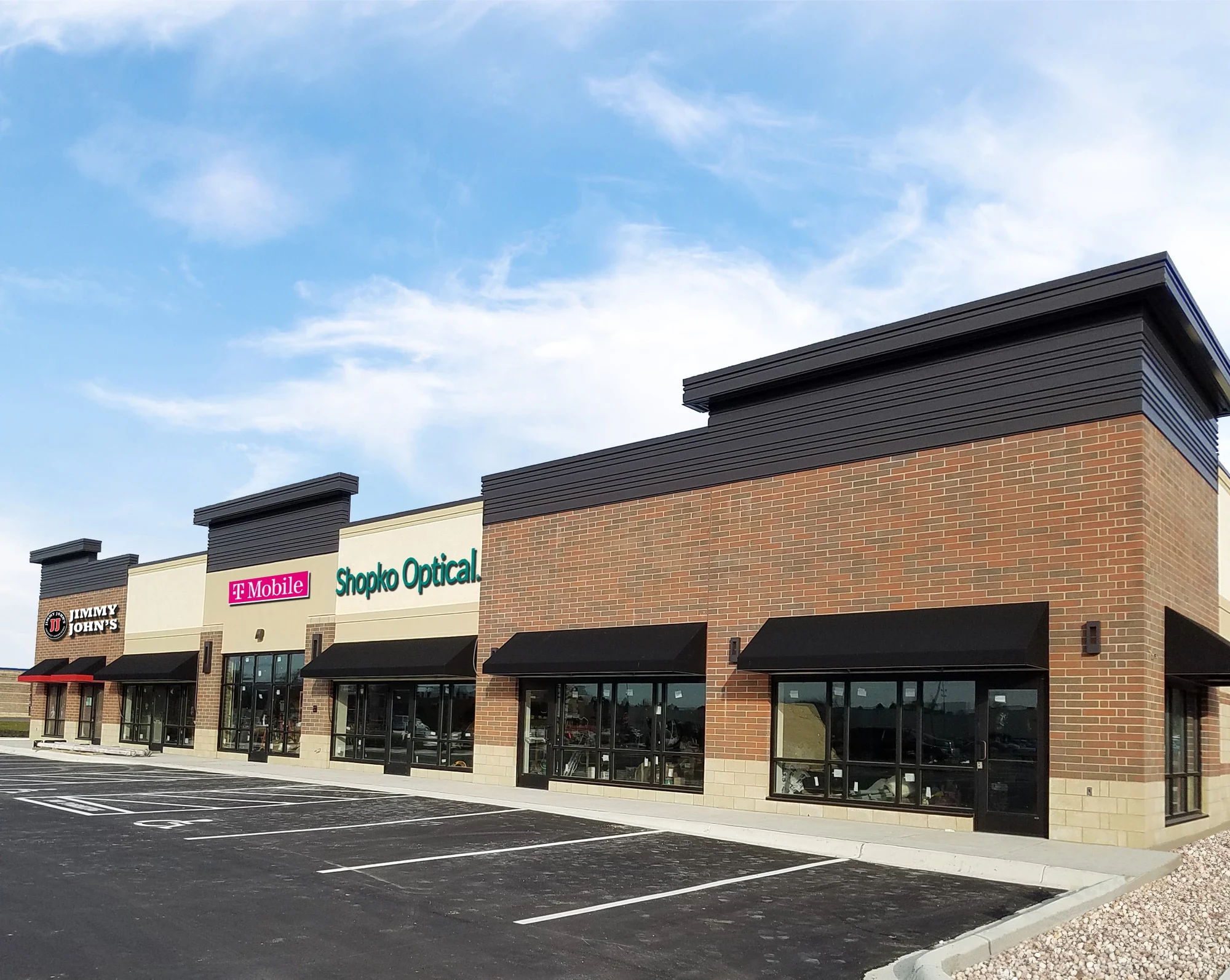
Big-Box Retail Roofing in Fayetteville, NC
Big-box retail roofing in Fayetteville, NC: sectioned tear-off, dock-traffic staging, and rooftop HVAC coordination for stores along Skibo Road and Owen Drive.
Big-Box Retail Roofing in Fayetteville, NC
Big-box retail roofing in Fayetteville, NC: sectioned tear-off, dock-traffic staging, and rooftop HVAC coordination for stores along Skibo Road and Owen Drive.
Keeping Big-Box Sales Floors Open During Roof Work
A big-box store on Skibo Road or Owen Drive doesn't close for a roof replacement. Customers keep walking in, trucks keep backing into the dock, and rooftop units keep running the HVAC load for a sales floor the size of several city blocks. Our job is to fix the roof without any of that stopping.
Sectioning Roof Work Around an Open Sales Floor
Big-box roofs are large enough that we don't need to touch the whole thing at once, and we plan the job that way. Tear-off moves in sections tied to the store's layout below, so if there's a leak over electronics or over the pharmacy counter, that's the section that gets attention first, with dry-in complete before we move to the next zone.
We also plan around store hours rather than assuming a blanket schedule. Loading and staging can often happen before doors open, with noisier tear-off work timed to when the sales floor underneath is least busy.
Working Dock Traffic Instead of Around It
Every big-box store runs on its loading dock schedule, and that schedule doesn't pause for a contractor's material delivery. We stage roofing material drops around the store's own truck schedule so our deliveries aren't fighting freight trucks for the same dock doors and the same lot space.
We also confirm which dock doors are actually in active use before setting up staging, since a store might designate one or two doors for receiving on a given day and leave the rest open for returns or overflow, and that pattern shifts by season.
Rooftop Units That Can't Go Down Mid-Summer
A big-box roof usually carries a dozen or more rooftop HVAC units keeping a sales floor comfortable through a Cumberland County summer. Any roof system we install or recover has to be detailed carefully around those units and their curbs, not simply patched near them. We flash and detail every penetration so units stay operational and weathertight through the work, since losing air conditioning on a hot July sales floor is its own kind of emergency.
Recover and overlay systems are common here specifically because they let us upgrade an aging membrane without pulling every rooftop unit off its curb, which keeps both cost and disruption down.
- Big-box general merchandise and discount retailers
- Home improvement and hardware superstores
- Wholesale club warehouse stores
- Sporting goods and outdoor superstores
- Electronics and appliance big-box locations
- Anchor department stores at enclosed malls
Holiday-Season Scheduling Around Retail Calendars
Big-box retailers protect their fourth quarter more than any other stretch of the year, and we plan roof work with that in mind. Major tear-off gets scheduled well ahead of the holiday rush, leaving the roof secure and weathertight before the store's busiest and least flexible weeks begin.
If a leak shows up mid-season anyway, we treat it as an emergency response rather than a scheduled job, because a wet sales floor during peak traffic is a liability issue that goes beyond routine maintenance.
Large Flat Roofs and Ponding on Wide Spans
Big-box roofs span wide open distances with fewer structural breaks than a strip center, which means drainage design matters more here than almost anywhere else in commercial roofing. We check slope and drain placement against the actual roof plan rather than assuming a big roof drains itself, because a ponding area over a wide-open sales floor can go undetected from inside for a long time.
We map elevations across the roof plane rather than relying on a visual walk of the surface alone, since a subtle low spot spanning fifty feet can be nearly impossible to spot by eye but shows up clearly once the actual numbers are checked.
Anchor Store Roofs Inside an Enclosed Mall Structure
Anchor department stores connected to an enclosed mall like Cross Creek Mall carry their own separate roof structure even though the building reads as one continuous property from the parking lot. That separation matters for scheduling, since mall common-area management and the anchor tenant's own facilities team often need to coordinate independently, and a roof section over an anchor store doesn't automatically fall under the mall's own maintenance contract.
We confirm which party actually holds responsibility for a given roof section before starting work, since anchor leases sometimes shift roof maintenance obligations back to the tenant even inside a mall the tenant doesn't otherwise manage.
Many big-box chains manage roofing decisions through a regional or corporate facilities team rather than a single store manager, with standardized specifications for membrane type, warranty length, and inspection frequency across every location in a region. We work within those standardized specs rather than pushing our own default system, since a corporate facilities team usually has good reasons tied to fleet-wide maintenance for the requirements they set.
That said, local conditions still matter inside a corporate spec. A standard membrane thickness written for a whole region doesn't always account for a specific store's drainage layout or rooftop equipment density, and we flag those site-specific factors back to the facilities team rather than installing to spec and hoping it holds.
Questions Big-Box Facilities Managers Ask Us
Can you work while the store stays open to customers?
Yes. We section the work and schedule the loudest phases around the store's own traffic patterns so customers and staff aren't disrupted below.
What happens to our rooftop HVAC units during the project?
They stay operational. We detail flashing and curb work section by section so units remain running and weathertight throughout.
Can you avoid major work during the fourth quarter?
We plan around the retail calendar specifically to have major tear-off finished before the holiday season starts.
Do you offer recover options instead of full tear-off?
Where the existing deck and insulation support it, yes. A recover system can extend roof life without pulling every rooftop unit.
How do you handle emergency leaks during peak season?
Those get prioritized as emergency calls, not scheduled maintenance, with tarping and dry-in as the immediate step.