
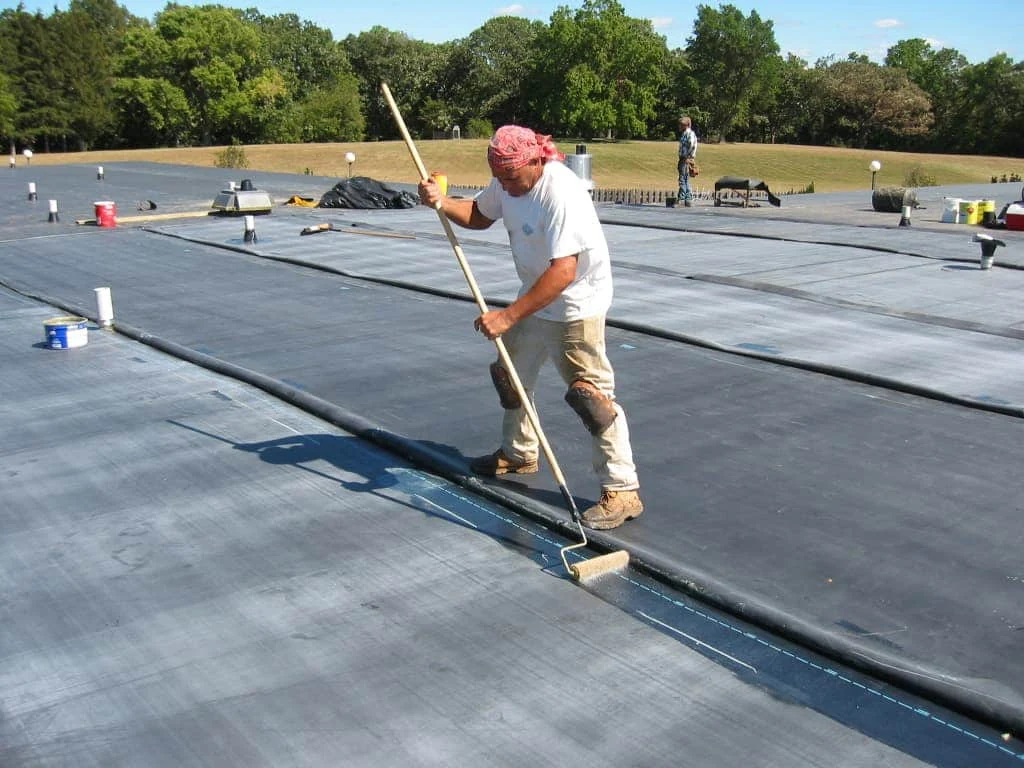
EPDM Commercial Roofing in Fayetteville, NC
EPDM roof repair, recover, and replacement for Fayetteville's older commercial and industrial buildings, phased around production schedules and tenant hours.
EPDM Commercial Roofing in Fayetteville, NC
EPDM roof repair, recover, and replacement for Fayetteville's older commercial and industrial buildings, phased around production schedules and tenant hours.
EPDM for the Older Roofs Behind This Market's Working Buildings
EPDM still covers a lot of square footage across Fayetteville's commercial stock, from downtown office buildings near Segra Stadium to processing and manufacturing buildings that have carried the same rubber membrane for two decades. We repair, recover, and replace EPDM roofs without treating every job as an excuse to sell a different system.
Where We Still See EPDM Doing Its Job
Ballasted and fully adhered EPDM shows up on flat commercial buildings all over this market: converted mill space in Erwin, office buildings downtown, and light industrial buildings scattered through Hope Mills and Eastover. A lot of it is original construction from an era when EPDM was the default flat-roof choice, and a well-maintained EPDM field can still have real years left in it even when the flashing and seams need attention.
We don't assume an EPDM roof needs full replacement just because it's twenty years old. We check the membrane's flexibility, seam adhesion, and moisture content in the insulation before recommending anything, because a lot of EPDM failures are seam and flashing problems, not field membrane problems.
Downtown buildings near the Segra Stadium district present their own version of this: mixed-use buildings where a ground-floor restaurant or retail tenant sits under the same roof as offices above, and any EPDM work has to account for multiple tenants with different operating hours and different tolerance for disruption.
Phasing Repair and Recover Work Without Shutting a Building Down
Processing plants in Clinton and Raeford run production lines that can't tolerate an open roof over active equipment, even for an afternoon. When we recover or repair EPDM on a working plant, we section the roof by bay, keep each section dried in before moving to the next, and schedule the noisiest work, like ballast removal, around shift changes rather than through the middle of a production run.
For office buildings with tenants below, we coordinate the loud phases of tear-off or ballast removal for early morning or after hours where the lease allows it, so tenants aren't dealing with equipment noise over a conference room during business hours.
Seam Adhesive and Sandhills Weather
EPDM seams depend on adhesive cure time, and cure time is sensitive to temperature and moisture. Humid mornings here slow adhesive cure more than a spec sheet written for a drier climate accounts for, so we build extra cure time into the schedule on humid days rather than pushing a seam into service before it's ready. Rushing that step is how a seam that looked fine at close-out opens up in year two.
What a Recover or Replace Decision Comes Down To
- Whether the insulation under the membrane is still dry
- How many seams have already been patched versus original
- Flashing condition at parapets, curbs, and penetrations
- Ballast condition if the roof is ballasted rather than adhered
- Remaining membrane flexibility after years of UV exposure
- Whether the building's use has changed since the roof was installed
A moisture survey answers most of those questions before we ever write a scope, which keeps us from recovering over a deck that's already compromised.
We put the survey results and photos in writing before quoting either path, so a property owner or a regional facilities director has something concrete to weigh rather than a verbal recommendation.
Hurricane-Remnant Wind on an Aging Membrane
An EPDM roof that's lost flexibility handles wind uplift differently than a new one. Remnant systems from storms like Matthew and Florence brought sustained wind that this region's older EPDM roofs felt at the edges and seams first, not the field. Part of what we check on any EPDM inspection after a wind event is perimeter attachment and flashing, because that's where an aging membrane gives first.
We recommend a post-storm walk-through on any EPDM roof in this market after a named remnant system passes through, even if no leak has been reported yet, since perimeter fastener pull-out and flashing separation don't always show up as an interior leak until months later.
Drains, Pine Debris, and Ballasted Roofs Specifically
Ballasted EPDM roofs collect pine needles and pollen in the stone more than a smooth membrane does, and that organic buildup holds moisture against the rubber longer than it should sit. We include ballast-area drain clearing in maintenance visits on this type of roof specifically, because it's easy to miss during a quick walk-by inspection.
Questions About EPDM We Hear Often
Is our EPDM roof too old to repair instead of replace?
Age alone doesn't answer that. We check membrane flexibility and deck moisture before recommending repair versus replacement.
Can you work on our EPDM roof without stopping production?
Yes, for most scopes. We section the work by bay and schedule the loudest phases around your shift patterns.
Why does our EPDM seam keep reopening in the same spot?
Recurring seam failure at one location usually points to movement, ponding, or a flashing detail nearby rather than the seam itself. We inspect the surrounding area along with the seam before writing a repair scope.
Should we switch to TPO instead of replacing with EPDM again?
It depends on the building's rooftop equipment, drainage, and how the roof is used. We'll walk you through both options with real numbers rather than pushing one system by default.
How often should a ballasted EPDM roof get inspected here?
Twice a year at minimum, given how much pine debris this region's tree cover puts into ballast, plus an inspection after any major wind event.