
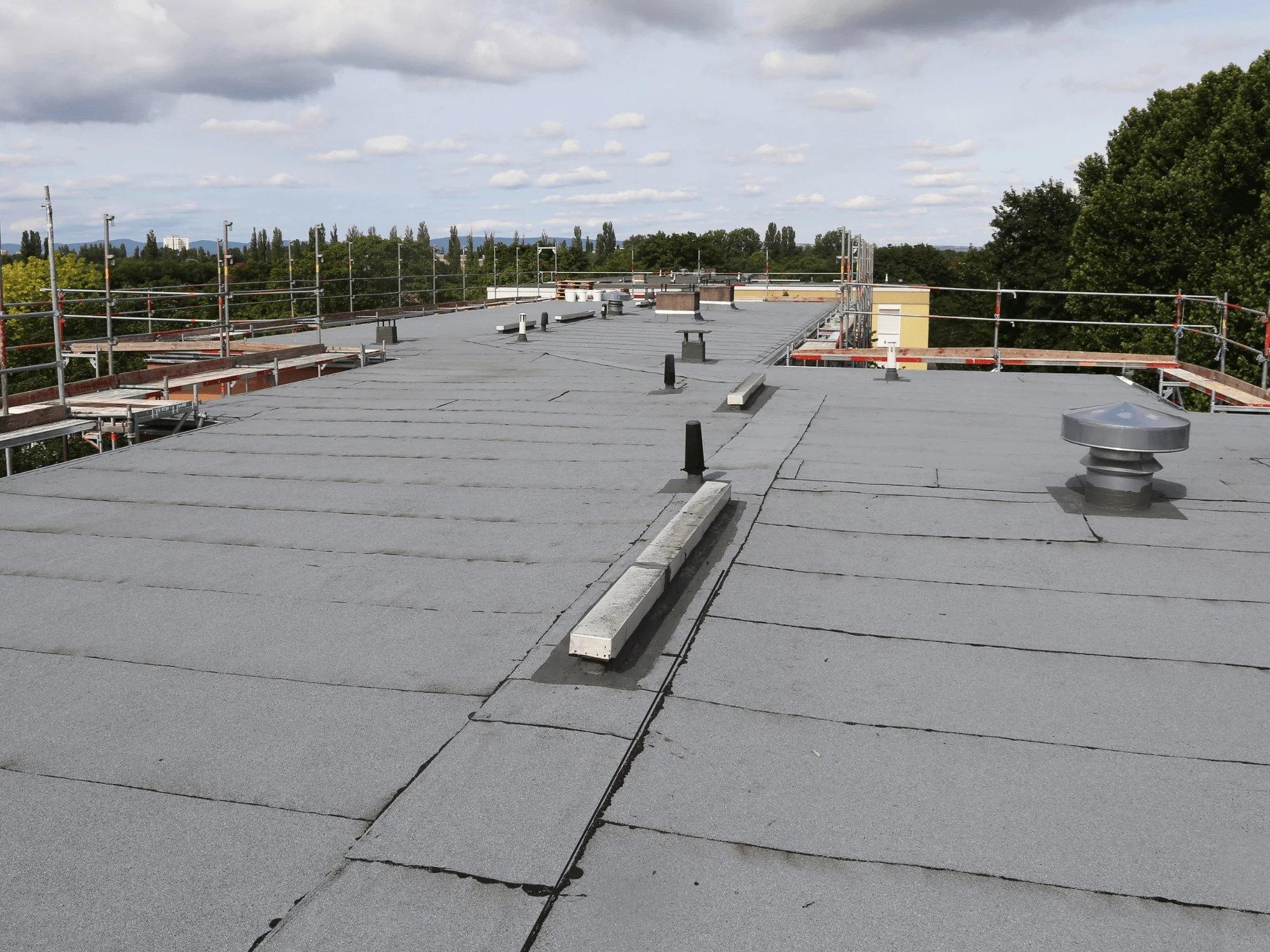
Roof Drains & Scuppers in Fayetteville, NC
Roof drain and scupper repair, replacement, and clearing for Fayetteville, NC commercial buildings — keeping water moving off the roof instead of sitting on it.
Roof Drains & Scuppers in Fayetteville, NC
Roof drain and scupper repair, replacement, and clearing for Fayetteville, NC commercial buildings — keeping water moving off the roof instead of sitting on it.
Where the Water Is Supposed to Go, and What Stops It
Every flat or low-slope roof depends on a handful of drains or scuppers to move water off before it can sit long enough to do damage. When one of those gets blocked, undersized, or damaged, the roof around it starts failing at a rate that has nothing to do with the membrane's actual condition.
Internal Drains Versus Scuppers
Internal roof drains tie into interior plumbing and pull water down through the building, which is common on larger flat roofs with parapet walls all the way around — a lot of the retail and office buildings along the Owen Drive and Bragg Boulevard corridors use this setup. Scuppers are openings cut through a parapet wall that let water spill off the edge, often paired with an external gutter and downspout system.
Neither setup is inherently better — it comes down to the building's roof structure and how it was designed to shed water. What matters is that whichever system is in place is sized correctly and kept clear, because both fail the same way when they are not: water backs up and sits.
Some larger buildings use both systems together — internal drains as the primary path and scuppers as overflow protection if a drain gets blocked during a heavy rain event. That redundancy is worth adding during a reroof on any building where a single blocked drain has caused problems before.
What Ponding Actually Does Over Time
A little standing water for a day after a hard rain is normal on plenty of roofs and is not itself a crisis. Water that sits for 48 hours or more starts accelerating membrane degradation at that spot specifically — UV breaks down the surface differently under standing water, and any small imperfection in the membrane becomes a much faster leak path when water is sitting directly on top of it instead of running off.
After a slow-moving rain system like the ones this region has seen in recent years, ponding areas that normally clear in a day can sit for most of a week if drains are even partially blocked, which is exactly the scenario that turns a minor ponding spot into an active leak.
Ponding also adds structural load the roof deck was not necessarily designed to carry indefinitely, which matters most on older buildings where the deck and structure were sized to a lighter design standard than current code requires.
How We Check and Clear Drainage
Every drain and scupper gets a flow check during inspection and maintenance visits — a step beyond a visual look, confirming water actually moves through at a reasonable rate rather than backing up. Debris screens get cleared of leaves, granules, and the general buildup that collects on any roof, especially ones near mature trees.
Where a drain is undersized for the roof area it is serving, or where a scupper opening has been reduced by corrosion or a bad repair, we will flag that as a design issue rather than just clearing it and moving on, because clearing an undersized drain only buys a little time before the same problem shows up again.
Repair and Replacement When Drainage Hardware Fails
Drain bodies corrode, especially older cast iron units on buildings that have gone decades without a full roof replacement. Scupper liners and through-wall flashing crack or separate from thermal movement over the years. Both get replaced in kind or upsized when the roof's actual drainage needs call for it, rather than patched over and left as-is.
On a full reroof, this is also the point where we correct any drainage design flaw baked into the original construction — adding tapered insulation to route water toward the drains more efficiently, or adding a scupper where one drain has been carrying more than its share of the roof area.
What a Drainage Service Call Typically Covers
A drainage inspection or repair visit usually includes:
- Flow testing at every drain and scupper on the roof
- Debris screen and strainer clearing
- Corrosion and flashing check at each drain or scupper body
- Ponding survey timed to how long water sits after rain
- Repair, replacement, or resizing recommendations where drainage is inadequate
Drainage Questions We Get From Building Owners
How much standing water is actually a problem?
Water clearing within 24 to 48 hours after rain is generally considered normal on a low-slope roof. Anything sitting longer than that, especially in the same spot repeatedly, is worth having checked.
Can a clogged drain cause damage even if the roof isn't leaking yet?
Yes — prolonged ponding degrades the membrane at that spot well before it becomes an active leak, so clearing drains is prevention rather than a response to a problem that is already showing.
Are scuppers or internal drains better for our building?
Neither is universally better — it depends on the building's existing structure and how it was designed to shed water. We work with whichever system is in place rather than recommending a switch unless the current setup is clearly inadequate.
How often should drains actually get cleared?
Twice a year at minimum as part of a standard maintenance visit, with an additional check after any storm that is likely to have brought down leaves or debris in volume.
Can you tell if our drains are undersized for the roof?
Yes — that is part of a full drainage assessment. If ponding keeps recurring even with drains clear, undersized or poorly placed drainage is usually the actual cause rather than a membrane problem.