
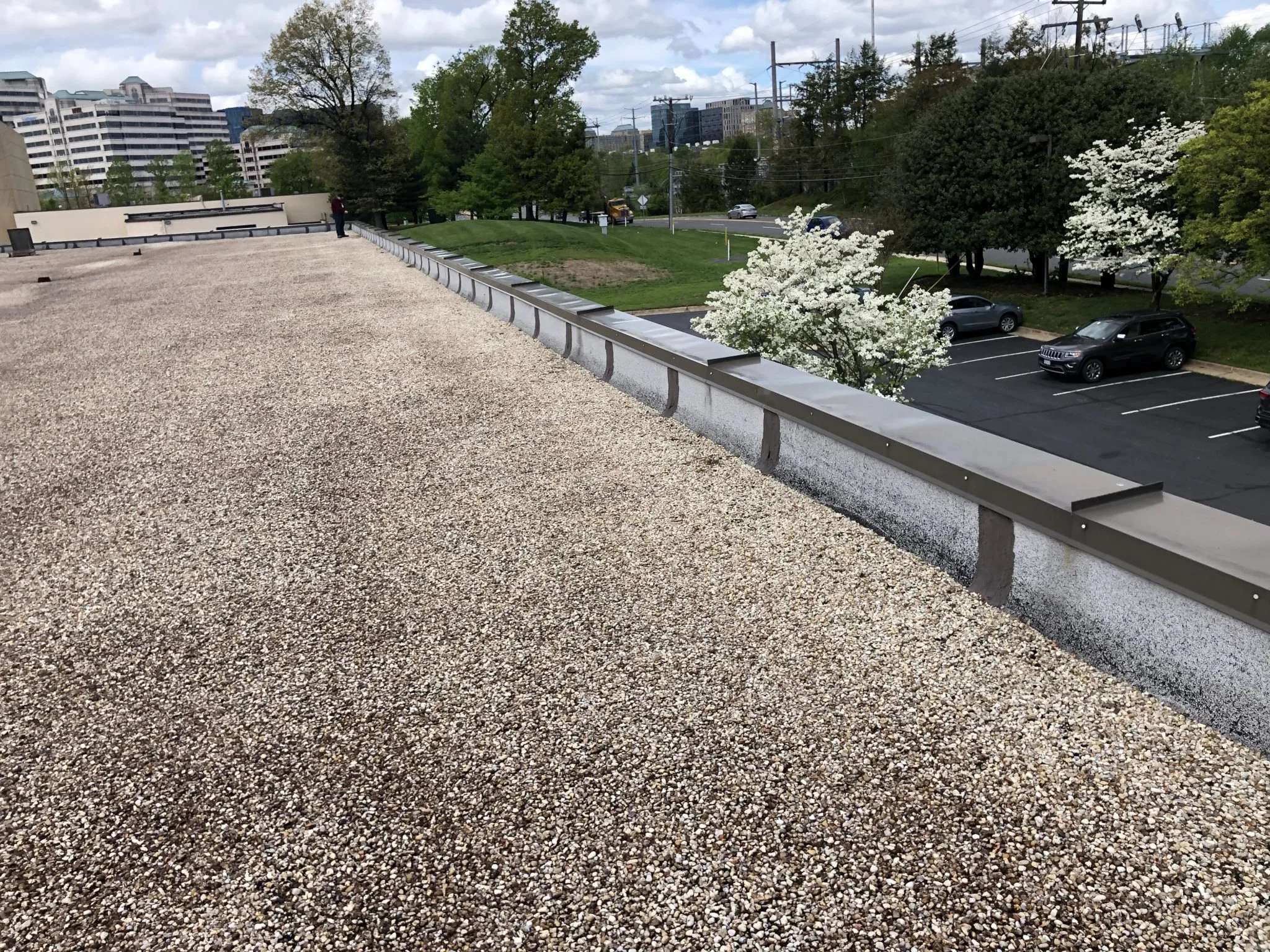
Built-Up Roofing (BUR) in Fayetteville, NC
Built-up gravel roof repair and recover for Fayetteville's older downtown and base-corridor buildings, keeping legacy BUR systems working instead of forcing tear-off.
Built-Up Roofing (BUR) in Fayetteville, NC
Built-up gravel roof repair and recover for Fayetteville's older downtown and base-corridor buildings, keeping legacy BUR systems working instead of forcing tear-off.
Built-Up Roofing: Keeping Legacy Gravel Roofs Working Instead of Racing to Tear Off
A lot of the older commercial buildings downtown and around the Fort Liberty corridor still carry original built-up roofing, gravel surface and all. We repair and maintain these systems on their own terms rather than treating every BUR call as a lead-in to a full tear-off pitch.
Why So Much of This Region Still Has Gravel Roofs
Built-up roofing was the standard for decades before single-ply systems took over, and a lot of downtown Fayetteville's office stock, along with older buildings near the base gates and light industrial buildings in Erwin's former mill district, were built during that era. Multiple plies of felt and asphalt under a gravel or mineral surface give these roofs real redundancy, and a well-maintained BUR system can outlast the service life most people assume it's already past.
The gravel surface itself does double duty: it protects the asphalt plies from UV degradation and it adds ballast weight that helps the roof resist wind uplift, which matters more here than in a calmer wind climate given the remnant systems that pass through after hurricanes make landfall further south.
Erwin's former mill buildings in particular carry roof structures built for a different era of manufacturing, and repairing the built-up system on those roofs often means working around structural quirks, uneven decking transitions and old equipment penetrations, that a newer prefabricated building simply doesn't have.
Repair Versus Replace on an Aging BUR System
Most BUR problems we find are localized: a blistered ply at a seam, gravel displaced off a low spot exposing bare asphalt to UV, or flashing that's separated at a parapet. Those are repairable without touching the rest of the field. We only recommend full tear-off when moisture surveys show the insulation and deck are compromised across a meaningful portion of the roof, regardless of how much age is on the paperwork.
For buildings where the BUR still has years left structurally but the surface is showing UV wear, a coating or cap sheet overlay can extend service life without the cost or disruption of a full tear-off.
We put the moisture survey findings in writing with photos of every test cut, so a building owner can see exactly what the recommendation is based on rather than taking our word for it on a roof they can't easily inspect themselves.
Working Around Occupied Buildings, Not Around the Crew's Convenience
Downtown office buildings and older retail near the base stay occupied during the work, and BUR repair or recover work can be loud and involve hot asphalt kettles that need careful staging. We keep kettle placement and material staging away from entrances, sidewalks, and parking used by tenants and customers, and we schedule anything requiring building shutdowns, like tie-ins to existing drains, for early morning or weekend windows when the building allows it.
What We Check Before Recommending a Path Forward
- Moisture content in the insulation and deck across multiple test cuts
- Ply separation, blistering, or alligatoring across the field
- Gravel coverage and whether bare spots have already exposed asphalt to UV
- Flashing and parapet condition at every penetration and edge
- Drain and scupper condition given how much debris a gravel surface can trap
- Whether the building's rooftop use has changed since original construction
A roof that scores well on most of those points is usually a repair candidate. A roof failing several of them at once is closer to the tear-off conversation.
What Hurricane-Remnant Storms Do to Gravel Roofs
Sustained wind from remnant systems, the kind Fayetteville and the surrounding Sandhills have felt from storms like Matthew and Florence, can displace gravel and expose asphalt plies to UV faster than a slow, steady weathering process would. After any major wind event, we check for gravel scour patterns and bare spots specifically, because those exposed areas degrade fast if they're not caught early.
We also check parapet caps and edge metal on every post-storm walk, since wind-driven rain on an older gravel roof tends to find its way in through a lifted cap or open edge seam well before it shows up as a leak anywhere near the center of the field.
Pine Debris and Gravel Roof Maintenance
Gravel surfaces trap pine needles and pollen more than any other roof type we work on in this region, and that organic material holds moisture against the asphalt plies longer than loose gravel alone would. Drain and low-spot clearing on a BUR roof out here needs to happen more often than the manufacturer's generic maintenance interval assumes.
Questions About Built-Up Roofing
Is our gravel roof too old to repair?
Age alone doesn't tell us that. A moisture survey and ply inspection across the field tells us whether repair still makes sense.
Can you fix a blistered section without redoing the whole roof?
Yes, in most cases. Localized ply damage is repairable without disturbing the surrounding field.
Why is there bare asphalt showing through our gravel?
Wind scour from storm events or foot traffic near equipment access points is the most common cause. Exposed asphalt needs attention before UV degrades it further.
Can a coating extend the life of our built-up roof?
Often, yes, if the underlying plies and deck are still sound. We check that before recommending a coating over a system this old.
How often should drains be checked on a gravel roof here?
At least twice a year given how much pine debris this region's tree cover adds, with a check after any major storm.