
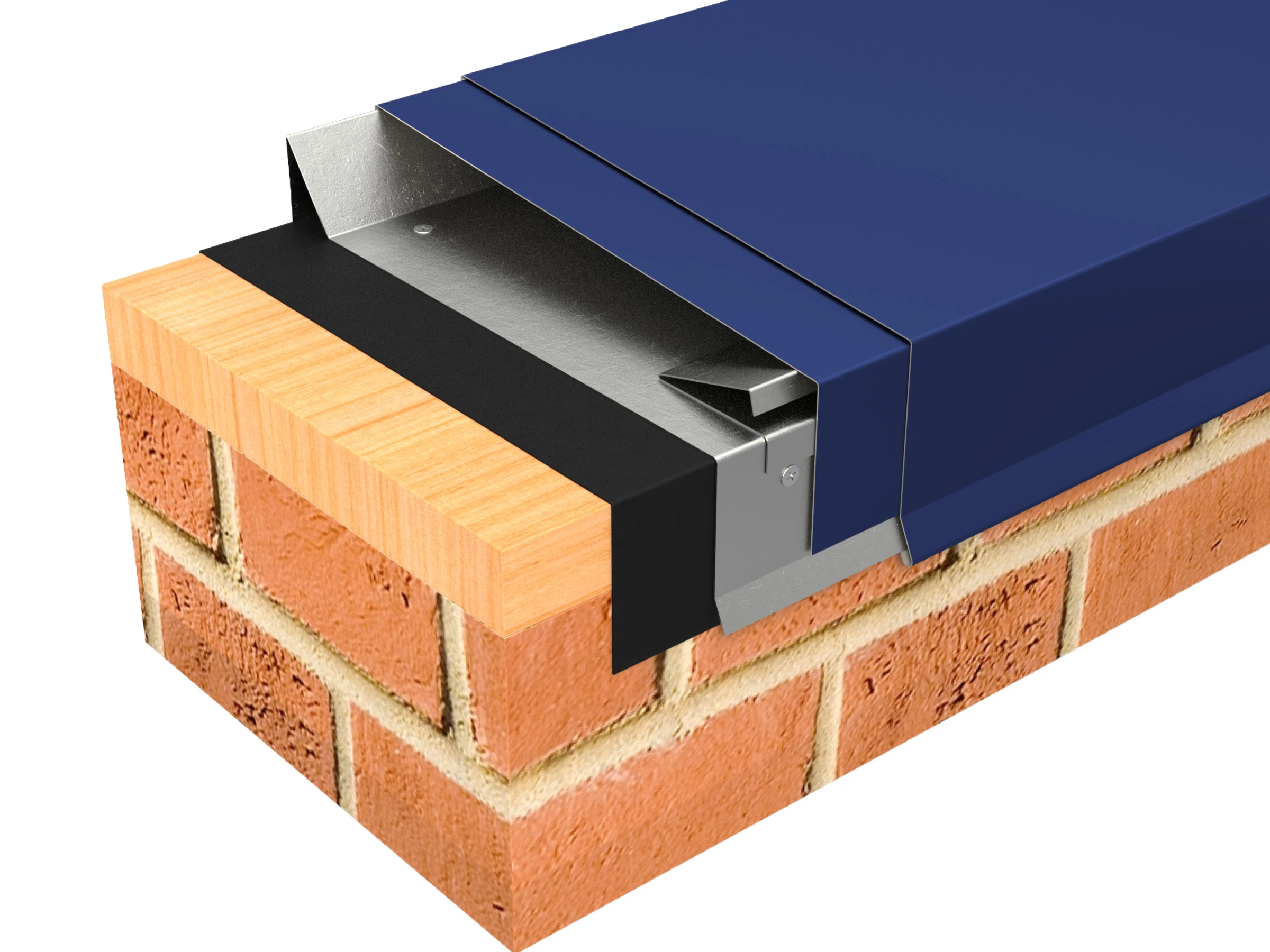
Edge Metal, Coping & Gutters in Fayetteville, NC
Edge metal, coping, and gutter repair and installation for Fayetteville, NC commercial roofs — the perimeter details that fail first in wind and drive most storm damage.
Edge Metal, Coping & Gutters in Fayetteville, NC
Edge metal, coping, and gutter repair and installation for Fayetteville, NC commercial roofs — the perimeter details that fail first in wind and drive most storm damage.
The Roof Edge Fails Before the Field Ever Does
Almost every wind-related roof failure we investigate starts at the perimeter — a section of coping, a run of edge metal, a gutter that pulled loose — not in the middle of the field. Get the edge details right and the membrane behind them holds up to a lot more than it would otherwise.
Why Wind Targets the Edge First
Wind moving across a flat roof creates uplift pressure that is strongest right at the perimeter and at corners, by simple aerodynamics. That is why every membrane manufacturer's wind uplift spec calls for tighter fastener spacing at the edge and corner zones than in the field — the physics is well understood, it just does not always get respected on older installations or cheaper original construction.
Once edge metal or coping lifts even slightly, wind gets underneath it and the uplift force multiplies fast. A section of loose coping that looked like a minor cosmetic issue in a spring inspection can turn into 20 feet of missing membrane after one significant wind event.
This is also why we walk the perimeter first on any post-storm inspection, before we even get to the field of the roof. If the edge held, the rest of the membrane usually has a much better story to tell.
Coping Systems and Why the Profile Matters
Coping caps the top of a parapet wall and sheds water away from the wall face on both sides. The profile, gauge, and fastening pattern all matter more than they look like they should — a coping system with continuous cleat attachment and properly lapped and sealed joints holds through wind that a snap-on or minimally fastened system will not.
We see a lot of older buildings around Fayetteville with coping installed to a lighter spec than current wind ratings call for, which is often the first thing we flag on an inspection even when the roof membrane itself is in decent shape.
Edge Metal and Drip Edge Detail
The edge metal at a roof's perimeter — where the membrane terminates and turns down over the fascia or wall — is one of the most failure-prone details on any low-slope roof because it takes both wind uplift and thermal movement stress at the same joint. Fastening spacing, cleat systems, and how the membrane is terminated into the metal all get checked closely on any edge repair or replacement.
On buildings we are reroofing, we upsize the edge metal spec beyond the bare code minimum where the building's exposure — height, surrounding terrain, corner conditions — suggests it is worth the small additional cost for meaningfully better wind performance.
Gutters and Where They Fit Into the System
Gutters handle water that edge metal and coping have already shed off the roof, and a poorly integrated gutter system can send water right back into a wall assembly it was supposed to be moving away from. We tie gutter installation into the edge metal detail rather than treating it as an add-on, so water actually moves off the building instead of finding a new path back in.
Debris buildup — leaves, pine straw, roofing granules on older systems — is the most common gutter failure we see, and it is almost always preventable with the kind of drain and gutter clearing that is part of a standard maintenance visit.
On buildings with internal roof drains as the primary system, gutters often only handle overflow from small areas like canopies or mechanical screens, but even that limited role fails the same way when nobody is clearing debris out of them.
What a Perimeter Repair or Upgrade Typically Involves
Perimeter work on a commercial roof usually covers:
- Coping cap repair, resealing, or full replacement to current wind spec
- Edge metal fastening upgrade at corner and perimeter zones
- Membrane termination and cleat repair at the roof edge
- Gutter and downspout repair or replacement, integrated with the edge detail
- Debris clearing and flow testing after installation
Edge Metal and Coping Questions We Get
Why does the roof edge need a different fastening pattern than the rest of the roof?
Wind uplift pressure is highest at corners and perimeters on any low-slope building, so manufacturer specs call for tighter fastening in those zones specifically. It is standard practice, not an upsell.
Can loose coping really cause that much damage on its own?
Yes — once wind gets under a lifted section of coping or edge metal, it can peel back membrane well beyond the original failure point in a single event. It is one of the cheaper things to fix proactively and one of the more expensive things to fix after it has already propagated.
How do you know if our gutters are actually part of the problem?
We check where water is discharging relative to the wall assembly and foundation, and whether debris buildup is causing overflow back toward the building rather than away from it. Both show up clearly during a roof inspection.
Should we upgrade edge metal during a reroof even if the current metal still looks okay?
Worth evaluating case by case — if the building's height or corner exposure suggests the existing spec is marginal for current wind rating requirements, upgrading during a reroof costs a lot less than doing it as a standalone repair later.
Do you handle gutter work separately from roof work, or only as part of a larger project?
Either way. Gutter repair or replacement on its own is a common standalone call, though we will always flag it if we see it during a roof inspection or maintenance visit regardless of what the visit was originally scheduled for.