
Commercial Roof Coatings in Fayetteville
Commercial roof coatings in Fayetteville with candidacy checks, preparation requirements, restoration scope, drainage review, and warranty planning.
Commercial Roof Coatings in Fayetteville
Commercial roof coatings in Fayetteville with candidacy checks, preparation requirements, restoration scope, drainage review, and warranty planning.
Acrylic Coatings for Retail Strips That Need a Budget-Friendly Fix
A coating recommendation starts with adhesion, moisture, drainage, membrane condition, detail preparation, and warranty eligibility—not every existing roof is a restoration candidate. Acrylic coating is the cost-conscious option for the retail strips and multi-tenant buildings clustered around the Fort Liberty gates and along the corridors leading into downtown Fayetteville. When a metal or single-ply roof needs UV protection and a longer service life but a full recover isn't in this year's budget, acrylic gets the job done at a lower cost than silicone.
Where Acrylic Fits Best in This Market
Retail strip centers near the base gates in Spring Lake and Hope Mills, along with smaller multi-tenant buildings around Cross Creek Mall and out toward Eastover, tend to run metal panel roofs or aging single-ply membranes that don't have the standing water problems that push a job toward silicone. On those roofs, acrylic coating provides UV protection and reflectivity at a price point that fits a strip center's typical maintenance budget better than a premium coating system would.
Acrylic also bonds well to metal roofing specifically, which makes it a common fit for the R-panel and standing seam roofs on retail and light commercial buildings throughout this market, alongside the membrane roofs it's more traditionally associated with.
Property management companies overseeing several small retail buildings around the base perimeter often standardize on acrylic recoating cycles across their whole portfolio, since it lets them budget predictable, smaller maintenance costs each year instead of facing a large reroof bill on every building at the same time.
Why Ponding Water Rules Acrylic Out Elsewhere
Acrylic doesn't resist standing water the way silicone does, so we don't recommend it on roofs with documented ponding areas. That's a real consideration in this market given how much low-slope roofing exists on older strip centers where original drainage design wasn't generous. Before quoting an acrylic job, we walk the roof after a rain event or check for ponding evidence, discoloration, algae growth, or debris rings, and steer toward silicone instead if we find it.
We'd rather turn down an acrylic quote and recommend the coating that actually fits the roof than sell the cheaper option and have it fail early, since a failed coating job costs a customer more in the long run than the price difference between the two systems.
Cure Windows in a Humid, Storm-Prone Climate
Acrylic coatings need a dry cure window before rain can touch them without washing the coating off before it sets. Fayetteville's summer weather pattern brings fast-building afternoon thunderstorms that can turn a clear morning into a washed-out application if the schedule doesn't account for it. We check short-range forecasts daily during an acrylic job and hold or adjust the day's application plan rather than racing a storm cell to finish a section.
Spring and fall generally give us more reliable dry windows for acrylic work in this region than the height of summer, and we schedule around that when a customer's timeline allows the flexibility.
When a job does fall in the middle of summer, we run shorter daily coating sections timed to finish curing before the typical early-afternoon thunderstorm window this region sees most days, rather than committing to a full-roof pour that a fast-moving storm cell could interrupt.
Coating Retail Roofs Without Disrupting Tenants Below
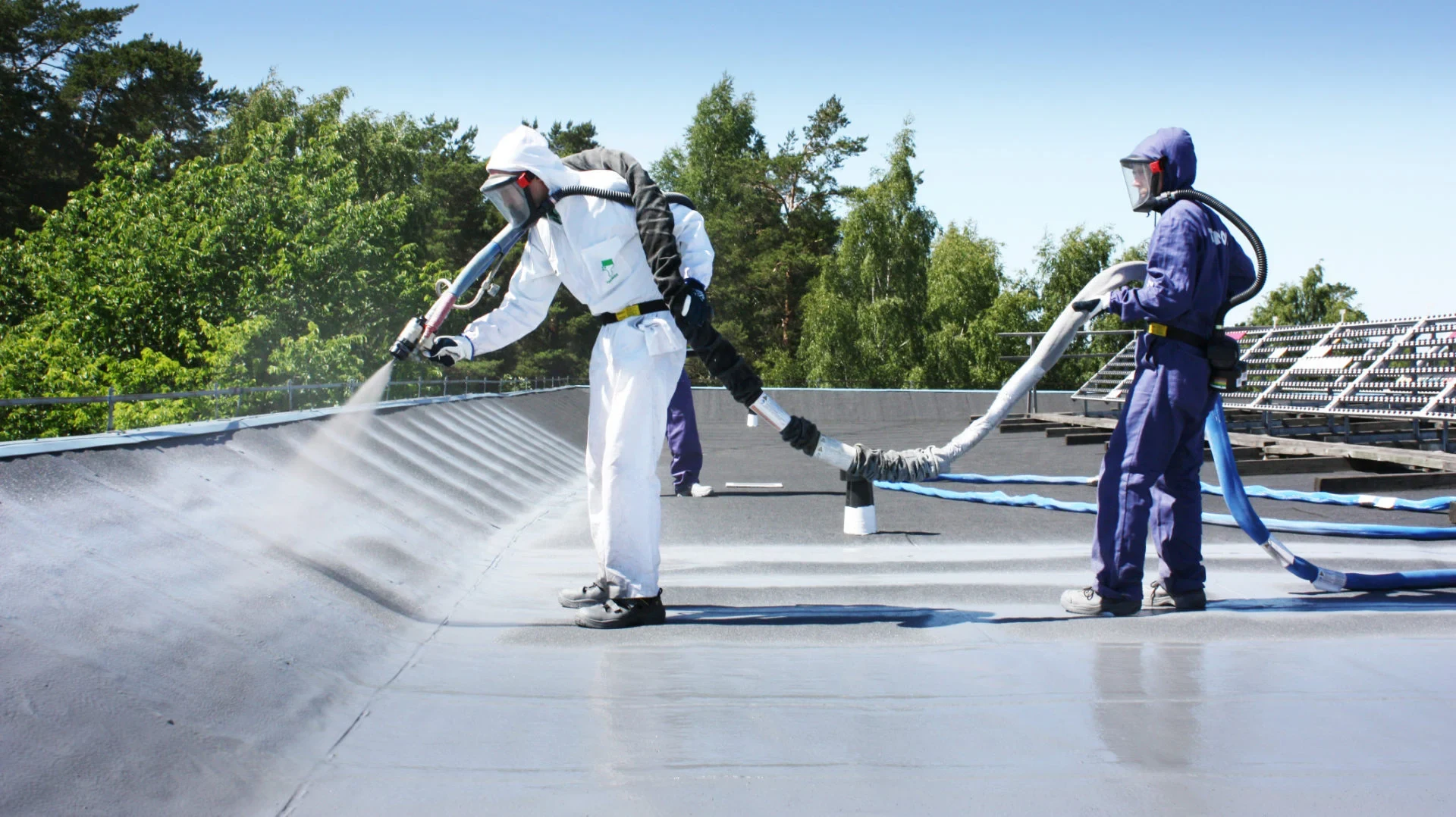
Strip center roofs sit over active retail and restaurant tenants who don't want overspray, odor, or noise disrupting business hours. We mask and protect storefronts, HVAC intakes, and walkways below the work area, and we schedule spray application for early morning before most tenants open, finishing before the parking lot fills for the day.
What We Check Before Recommending Acrylic
- Ponding water history across the roof field
- Substrate type, metal panel versus membrane, since prep differs between them
- Existing coating or rust condition on metal roofs
- Roof pitch and drainage pattern
- Tenant operating hours below the work area
- Realistic dry-cure windows given the season
Getting substrate prep right matters more with acrylic than with premium coatings, since acrylic's lower material cost doesn't leave as much margin for a coating that fails to bond properly.
Pine Pollen and Coating Adhesion on Metal Roofs
Metal roofs on retail buildings near this region's pine cover collect the same spring pollen film that affects membrane roofs, and that film needs to come off before acrylic goes on. We build a pressure-wash or chemical-clean step into acrylic prep whenever a job falls during or shortly after peak pollen season.
Rust spotting on older metal roofs can hide under that same pollen film, so the cleaning step doubles as an inspection point where we catch corrosion that needs a spot repair before coating rather than sealing a rust problem under a fresh coat and calling it finished.
Questions About Acrylic Roof Coatings
Is acrylic coating cheaper than silicone?
Yes, generally, which is why it's a common fit for retail strip centers working within a tighter maintenance budget.
Will acrylic work on our metal roof or just membrane roofs?
Acrylic bonds well to metal panel roofing, which makes it a frequent choice for R-panel and standing seam retail buildings in this market.
What happens if it rains right after you apply acrylic coating?
If it rains before the coating cures, it can wash off incomplete work. We track forecasts closely and won't start a section without a safe dry window.
Can you coat our roof without disrupting our store hours?
Yes. We schedule spray application for early morning and protect storefronts and walkways from overspray.
Why did you recommend silicone instead of acrylic for our building?
Usually because we found ponding water on the roof. Acrylic doesn't handle standing water as well as silicone does.