
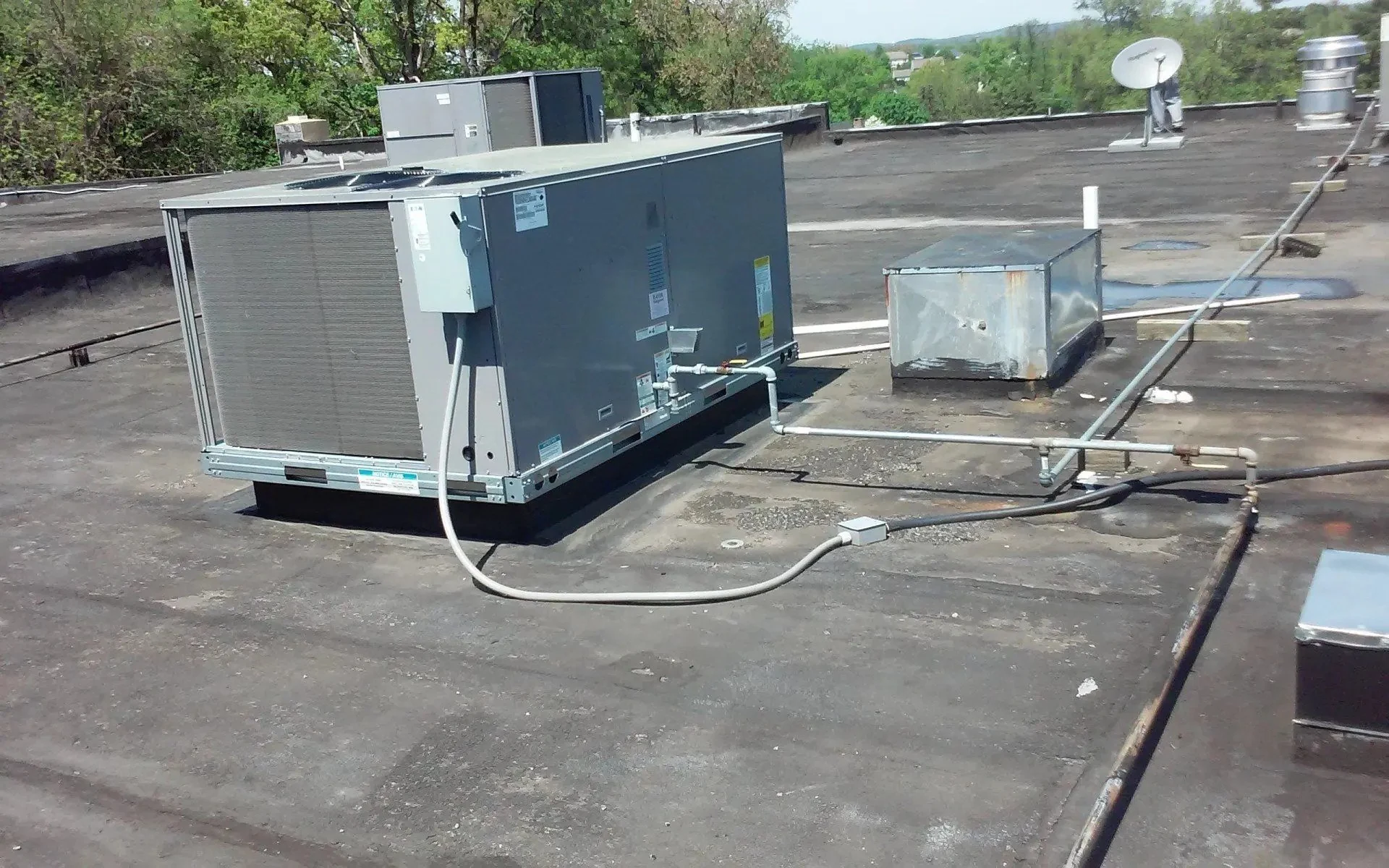
TPO Single Ply Roofing in Fayetteville, NC
TPO single ply roofing for Fayetteville distribution centers, warehouses, and base-adjacent retail, installed in phases that keep dock doors and drive aisles open.
TPO Single Ply Roofing in Fayetteville, NC
TPO single ply roofing for Fayetteville distribution centers, warehouses, and base-adjacent retail, installed in phases that keep dock doors and drive aisles open.
TPO on Roofs That Can't Afford a Slow Install
TPO single ply is the system we specify most often on distribution buildings and base-adjacent retail across the Fayetteville market. It installs fast, reflects heat off a low-slope deck, and gives us a membrane we can weld tight against the wind loads that come through with hurricane remnants.
Why TPO Fits This Market's Building Stock
A lot of what we cover with TPO is exactly the kind of building this region has the most of: distribution centers along I-95 in Dunn and Benson, warehousing near Lumberton's I-95/I-74 junction, and retail strips that ring the Fort Liberty gates in Spring Lake and Hope Mills. These are large, open field roofs where a mechanically fastened or fully adhered TPO system covers a lot of square footage without a lot of penetrations to complicate the install.
White TPO also does real work in July and August heat here. A reflective membrane keeps rooftop temperatures down, which takes load off HVAC units that are already running hard cooling a processing floor or a distribution center full of product.
Fort Liberty's own base-adjacent facilities and the general contractors who build for them lean on TPO for the same reasons commercial owners do: predictable install timelines, a membrane that's easy to inspect during a walk, and manufacturer warranty terms that hold up when the roof is documented correctly from day one.
How We Phase a TPO Install Around a Working Dock
Distribution buildings don't stop moving product because there's a crew on the roof. We break the field into sections tied to which dock doors are active that day, weld and secure one section fully before moving to the next, and keep the building dried in overnight regardless of where we stopped. If a facility runs three shifts, we coordinate crane and material delivery windows around shift change so a flatbed isn't blocking a bay when trucks need to pull in.
For buildings with tighter footprints, like retail strips near the base gates, we stage materials off to one side of the parking lot and keep at least one drive aisle open at all times. Nobody circles a full lot for twenty minutes because we parked a boom lift in the wrong spot.
Seam Welding in Sandhills Humidity
TPO seams weld by hot air, and humidity and surface moisture both affect weld quality. Summer mornings here carry heavy dew, and afternoon thunderstorms roll through fast enough to catch a crew mid-seam if the schedule isn't built with weather windows in mind. We test-weld before committing to a full run each morning and adjust temperature and speed as conditions shift through the day, rather than running a fixed setting regardless of what the membrane is actually doing.
Wind Uplift and What Hurricane Remnants Actually Do
Fayetteville doesn't take direct hurricane strikes most years, but the remnant systems that move through after landfall further south or east still bring sustained wind and driving rain, the kind this region remembers from Matthew and Florence. TPO's fastening pattern matters more here than the membrane spec sheet suggests, because it's the field and perimeter attachment that determines whether a roof holds when wind gets under an edge. We spec fastening density based on building height and exposure, not a single standard pattern for every roof.
What We Check Before Recommending TPO
- Deck condition and moisture content under the existing roof
- Drainage slope and low spots that would pond on a new membrane
- Rooftop unit curbs, penetrations, and how many terminations the field will need
- Parapet height and wind exposure category for fastening spec
- Access for material delivery and crane staging around the building
- Existing insulation R-value versus what the building needs
Skipping any of those steps is how a TPO roof ends up with problems in year three instead of year twenty.
We also walk the loading dock area itself before quoting an install, since staging and crane access can end up dictating as much of the project timeline as the roof scope does on a distribution building with tight yard space.
Maintenance That Keeps a TPO Roof Out of Trouble
Pine pollen and needle drop off the longleaf pines that cover this region settle into drains and low spots every spring, and left alone that buildup holds moisture against seams longer than the membrane is designed for. We build drain clearing into any maintenance contract on a TPO roof out here rather than treating it as an optional add-on.
A membrane inspection twice a year also catches seam and flashing issues while they're still small, which matters most on distribution buildings where a leak over palletized product is a bigger cost than the repair itself.
Questions We Get About TPO
Can you install TPO without shutting down our loading dock?
Yes. We phase the install by section and coordinate with your dock schedule so active bays stay open while we work the rest of the field.
How long does a typical TPO reroof take on a distribution building?
It depends on square footage and how many penetrations are on the roof, but we give you a section-by-section schedule up front so you know which bays are affected on which day.
Does TPO hold up to the wind we get from hurricane remnants?
The membrane and the fastening pattern both matter. We spec fastening density for your building's height and exposure rather than a generic pattern.
What color TPO should we use?
White is standard for heat reflection and is what most manufacturers warranty at full term. Gray is available where a building wants less glare or a different appearance.
How often does a TPO roof need drains cleared out here?
We recommend at least twice a year given pine pollen and needle drop, with an extra check after any major storm.