
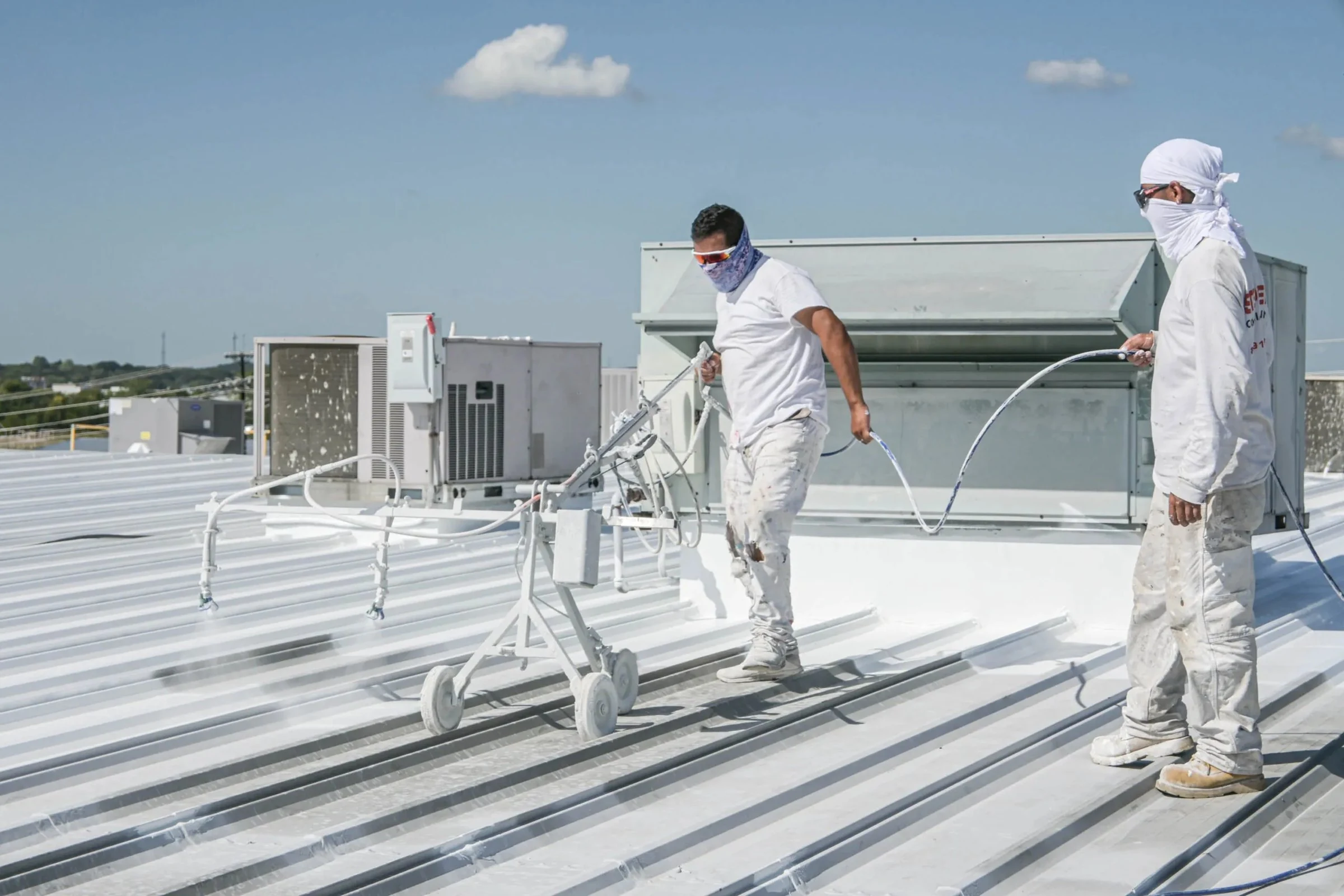
Silicone Roof Coatings in Fayetteville, NC
Silicone roof coatings extend the life of aging Fayetteville commercial roofs without a full tear-off. Ponding resistance, humidity cure, and substrate prep.
Silicone Roof Coatings in Fayetteville, NC
Silicone roof coatings extend the life of aging Fayetteville commercial roofs without a full tear-off. Ponding resistance, humidity cure, and substrate prep.
Silicone Coatings: Buying Years on a Roof Without a Full Tear-Off
A silicone coating isn't a new roof - it's a restoration system applied over an existing membrane that still has structurally sound insulation and deck underneath but has aged past the point where the surface can shed water and UV on its own. On a lot of government, school, and older retail roofs around Cumberland County, coating restoration stretches a roof's usable life by years for a fraction of full replacement cost.
What the Coating Actually Fixes
An aging membrane - whether it's TPO, EPDM, or an old built-up roof - typically fails first at the surface: UV degradation, minor cracking, seams that have opened slightly, or a granulated cap sheet that's lost its protective layer. A silicone coating goes down as a continuous, fluid-applied layer that seals those surface issues and forms a new weatherproofing skin over the existing system, provided the insulation below is still dry and the deck is sound.
It's not a fix for a roof with wet insulation or structural deck problems - coating over a wet roof just traps the moisture and hides the problem until it gets worse. That's why every coating job starts with a real moisture-scan assessment instead of a quick visual walk.
Why Ponding Water Doesn't Rule Out Silicone
Most roof coatings - acrylics especially - break down faster in areas where water sits rather than draining quickly, which is a real problem on roofs with low spots or drains that get clogged with pine debris between maintenance visits. Silicone is the exception: it holds up under standing water significantly better than acrylic or most other coating chemistries, which makes it the right call on roofs where drainage has never been perfect and probably won't be perfectly fixed as part of a coating project.
That's a meaningful advantage in this region, where pine straw and needles collect at drains faster than a lot of markets and low spots can hold water for a day or two after a heavy remnant-storm rain event before draining completely.
The One Weather Condition That Actually Helps
Most roofing work fights humidity - it slows adhesive cure, complicates welding, and extends dry-in windows. Silicone coating is the rare exception: moisture-cure silicone formulations actually cure faster in the kind of high humidity Fayetteville sees through summer and early fall, rather than fighting against it. That means coating projects scheduled during the region's most humid stretch aren't losing cure time the way an adhesive-based system might.
What Has to Happen Before the Coating Goes Down
Surface prep decides whether a silicone coating lasts its full service life or fails early. That means pressure washing to remove dirt, pollen, and pine residue, repairing any open seams or punctures in the existing membrane first, and priming where the manufacturer's system calls for it. Skipping prep to save a day on the schedule is the most common reason a coating job underperforms, and it's the step we don't compress no matter how tight the project timeline gets.
- Aging TPO or PVC membranes with surface UV degradation but sound seams
- Older EPDM roofs with minor surface checking or fading
- Spray polyurethane foam roofs due for a scheduled recoat cycle
- Built-up or modified bitumen roofs with a failing cap sheet but dry insulation below
- Metal roofs with surface rust or seam deterioration but sound structural panels
Why This Fits Government and School Budget Cycles
Public-sector roofs often run on capital budget cycles that don't align neatly with when a roof actually needs full replacement. A coating restoration lets a facilities director extend a roof's service life within the current budget cycle and push full replacement into a future capital plan, rather than scrambling for emergency funding when a roof that's 80% functional still has years of life left in its structure and insulation.
We run the numbers on coating versus replacement candidly for every public building we evaluate - sometimes the roof really is past the point where coating makes sense, and we say so rather than selling a coating job that's just delaying an inevitable tear-off by a year.
Recoating an Occupied Building
Coating application doesn't require the tear-off phasing a full reroof does, but it still means rooftop access, spray or roller equipment, and odor during application. On occupied buildings we schedule the messier stages around business hours and keep intake vents and fresh-air equipment protected during spraying so odor doesn't migrate into the building through the HVAC system.
Silicone Coating Questions
How long does a silicone coating extend a roof's life?
It depends heavily on the condition of the substrate underneath and how much life the insulation and deck still have. We give owners a realistic range based on core sample findings rather than a blanket number.
Can silicone be recoated again in the future?
Yes, silicone systems are generally designed for future recoat cycles, which is part of what makes them attractive for long-term budget planning on public buildings.
Does silicone coating fix ponding water problems permanently?
It resists ponding better than most coatings, but it doesn't correct the underlying drainage slope. Persistent ponding usually needs a drainage fix alongside the coating, which we flag during assessment rather than coating over a problem that will keep recurring.
Is silicone coating a good fit for a roof with active leaks?
Active leaks need to be located and repaired before coating, not covered up by it. We treat leak repair as a prerequisite step, not something the coating itself will resolve.
How does silicone compare to a full recover overlay?
A coating restores the existing membrane's surface; a recover adds a new membrane system over the old one. Which makes sense depends on how much life is left in the current roof's waterproofing layer, which we determine through core cuts rather than assumption.